Story craft · Essay 13
How to Write a Book About Your Life Without Starting at Birth
One undated photograph, a disputed orange bowl, and a life story that begins where memory refuses to stay filed.
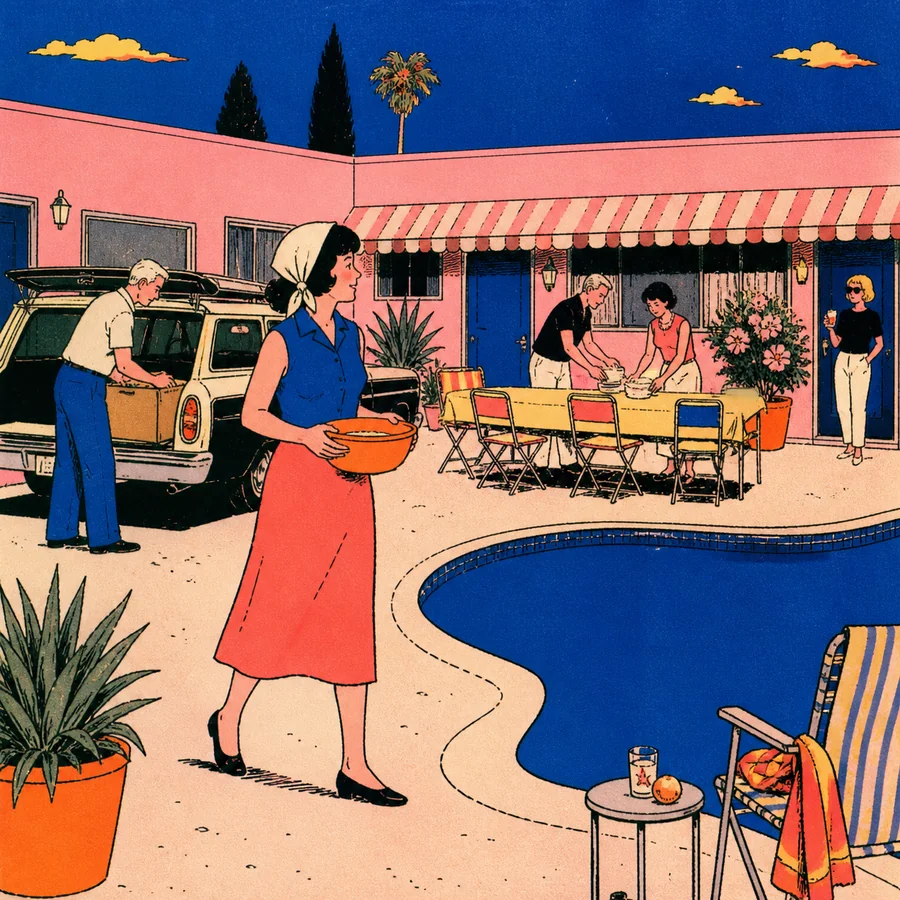
If you're wondering how to write a book about your life, do not begin by assigning Chapter One to being born. You were there, technically, but your notes are terrible. Start instead with one period, relationship, place, or question that still bothers you, then choose scenes that let a reader experience why it matters. A whole life is material. A book needs a shape.
This is good news if you have opened a document called My Life Story, typed your birth date, and immediately developed a deep interest in adjusting the margins.
Chronology offers a wonderfully solid-looking plan. Birth. School. First job. Marriage. The year the basement flooded. The other year the basement flooded, now with character development. It feels responsible because nothing has been omitted except a reason to keep reading.
The trouble is not that ordinary life lacks stories. A life contains too many of them, and they do not arrive labeled for narrative importance. The afternoon that changed you may look smaller in a calendar than the graduation that did not. Your memory has been filing documents in a damp shed for years. Some boxes are missing. One receipt is somehow glowing.
So I would begin with the thing that keeps returning.
Memoir vs autobiography: which life story are you writing?
Memoir and autobiography overlap, and writers use the labels with some freedom. The practical distinction is scope. An autobiography usually attempts a broad account of a life. A memoir usually selects a part of one.
Marion Roach Smith describes memoir as focused territory rather than the whole map. I like that because territory has borders, weather, and at least one road you have no business taking after dark.
You do not need to settle the label before you write a page. If the project is for your children and grandchildren, a wide life story may be exactly right. If it is about the five years you cared for your father, the restaurant your family ran, leaving a faith, joining the Navy, recovering from a public mistake, or learning what your mother had hidden in the pantry, a memoir's narrower lens may serve it better. A collection of linked essays may serve it better still.
The label can wait. The boundary cannot wait forever.
Try finishing this sentence: This is a book about the years when I was trying to ____. The blank might hold keep our store open, be the easy child, learn my brother, or build a home in a city I planned to leave.
Then try: I believed ____ at the beginning, and by the end I could no longer believe it in the same way.
The second sentence need not contain a tidy transformation. You may not become wiser, healed, or available for a conference keynote. Perhaps you stop needing an answer. Perhaps you understand why two people could love each other and still do damage. Perhaps the question becomes more precise. Books are allowed to change the furniture without renovating the entire soul.
How to start writing a book about your life from one scene
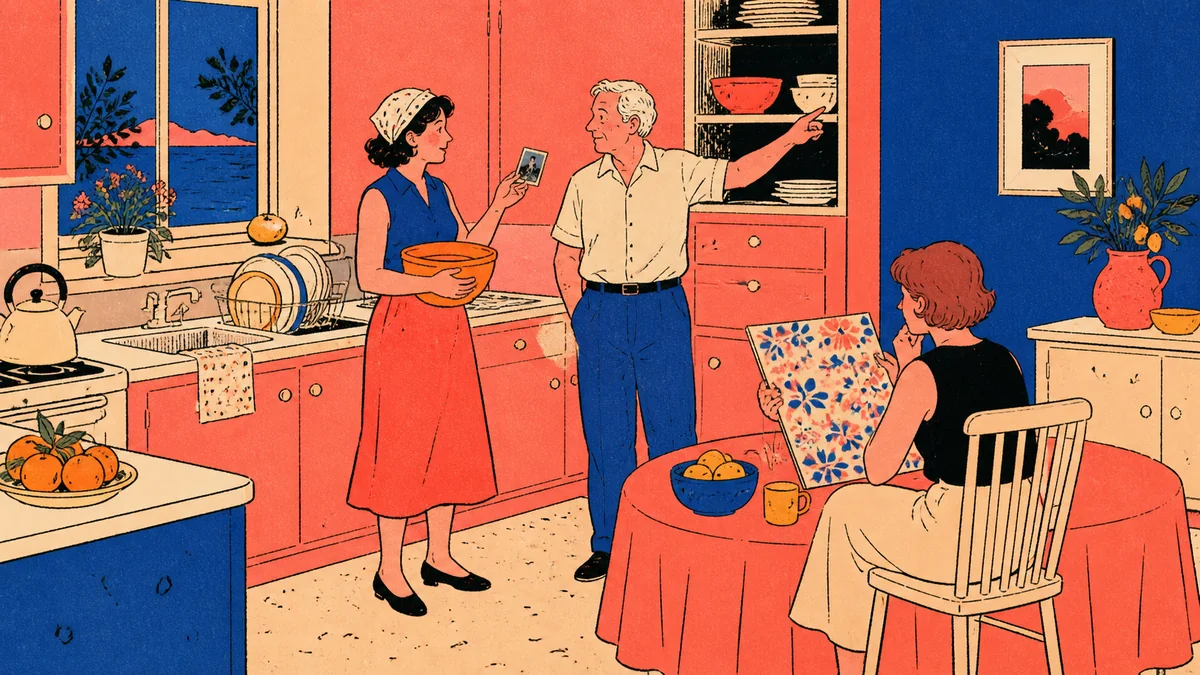
Maybe you have a shoebox of photographs. Most have dates in pencil. One does not. It shows a kitchen you recognize, three people you almost recognize, and an orange mixing bowl nobody remembers owning. You could spend two weeks establishing whether the curtains were installed in 1987 or 1988. Somebody in your family will know and will tell you before you finish the question.
The more useful question may be why this picture survives when clearer photographs leave you cold. What was true in that kitchen that you did not understand then? What changed afterward? Why are you looking now?
That is a memoir-shaped question. Not what happened in my life? That warehouse has poor signage. Ask instead: What am I still trying to understand about this part of it?
Tanja Pajevic recommends clarifying a memoir's scope and central question before shaping its narrative arc. That does not mean you must discover the perfect theme in advance. Early scope is a fence made of string. It keeps you near the material long enough to notice what the material is doing, and it can move when the goat gets ambitious.
If no question arrives, make a memory list without years. Write down moments that still have heat, embarrassment, tenderness, or unfinished business. Do not rank them by public importance. Include the time you drove home without turning on the radio. Include the cake your aunt dropped and served anyway. Include the motel ice machine, the borrowed shoes, the night everyone agreed not to mention the broken door.
Now circle two memories that seem to know each other.
The list is not your outline. It is a suspicious gathering in the parking lot. Go ask what they are doing there.
If the project feels too large, the essay on building a novel outline that can change offers the same useful permission from the fiction side: a plan can help you investigate without notarizing the future.

Turn memories into scenes before explaining them
Choose one memory and write it as a scene. Put your past self somewhere physical. Give them an ordinary action before the large meaning arrives. Let them wash the orange bowl, wait outside the principal's office, count tips, carry a suitcase down three flights, or pretend to read the menu. What can they see? What do they want in that minute? What do they misunderstand?
Write the scene before you explain the life. Summary has hindsight. Summary can tell us, “That was the summer my parents separated.” Scene can let the screen door bang while your father loads one lamp into a car and says he will return before dinner. The older narrator knows what the lamp means. The child may be worried that the living room will look lopsided.
Both views belong in memoir.
Sarah Chauncey distinguishes the author's present perspective from the perspective of the past self inside the event. The writer choosing the scene knows what happened later. The person living it did not. If you let both voices flatten into one, your eight-year-old may begin discussing the family's emotional patterns with the confidence of a podcast host. Children are observant. They are rarely that well produced.
Let the past self notice what they could have noticed. Let the present narrator decide when to add context, doubt, regret, or a connection that became visible years later. The distance between those two minds may be the book.
This is close to writing dialogue that carries what a person wants in the moment. The difference is that memoir cannot treat a half-remembered exchange as a clean transcript just because the line would look good in quotation marks.
Write the truth without pretending memory is a recording
Most of us cannot reproduce a twenty-year-old conversation word for word. Memory keeps the insult and loses the sentence before it. It remembers where someone stood and quietly replaces the wallpaper.
You can paraphrase. You can write, “As I remember it,” or admit that your sister recalls another version. You can reconstruct the gist when the genre and your stated method permit it, but do not invent certainty and call it memory. If the precise words matter, look for letters, journals, emails, recordings, court records, photographs, calendars, or the person who was there. Research your own life with the same curiosity you would bring to someone else's.
Name your uncertainty when it matters. Evidence will not make memory identical across a family. It may make the disagreement more interesting.
Suppose you ask your brother about the kitchen photograph. He says the bowl was red, not orange. He remembers the picture being taken after your mother came home from the hospital. You remember it before. Your cousin identifies the wallpaper, the year, and the brand of cake mix while somehow having no memory of the argument everybody else heard.
Do not panic. You have discovered that the past contained more than one camera.
How do you write about real people fairly?
Amye Archer has written about revising a portrayal of her former husband until the book included the love and attachment that had once been real, not only the anger that remained. The revision did not require her to erase harm. It required a wider honesty.
That is hard work, especially when writing begins as a private act of survival, witness, or explanation. The first draft may need to accuse. Let it. Private pages can hold the sentence before you understand its shape.
Publication is a later decision.
Before sharing the work, return to every living person on the page and ask what belongs to your story. You can describe what your friend told you. You should think carefully before exposing a secret that is mainly theirs. Changing a name may reduce recognition for a casual reader, but it does not turn a recognizable person into a fictional one, and it is not a magic legal poncho.
There is no single permission rule that fits every memoir. Writers disagree about when to show pages, whom to ask, and how much control another person should receive. Relationships, vulnerability, public interest, accuracy, safety, and publication risk all matter. If a manuscript could seriously damage someone's privacy, reputation, custody, employment, or safety, get advice appropriate to the actual situation before publication. A craft article cannot clear a book for takeoff.
While drafting, ask: Am I telling the part of this person's story that intersects with mine, or have I quietly become their unauthorized biographer?Lisa Romeo's conversations with memoirists return to that boundary: the writer can tell their stories of another person without claiming the whole person as material.
The question applies to the narrator too. Memoir can turn the present self into the only competent adult in a building full of former fools. Resist that arrangement. Your past self deserves context rather than contempt. Your present self deserves cross-examination.
What did you want badly enough to misunderstand somebody? Where did you enjoy the benefit of a situation you now criticize? What did you know earlier than you admit? What kindness have you left out because it complicates the clean villain?
Write your part of the story, including the inconvenient parts. That does not settle every ethical or legal question. It does make the people on the page less likely to resemble furniture arranged around your conclusion.
Build your memoir structure after the material starts answering back
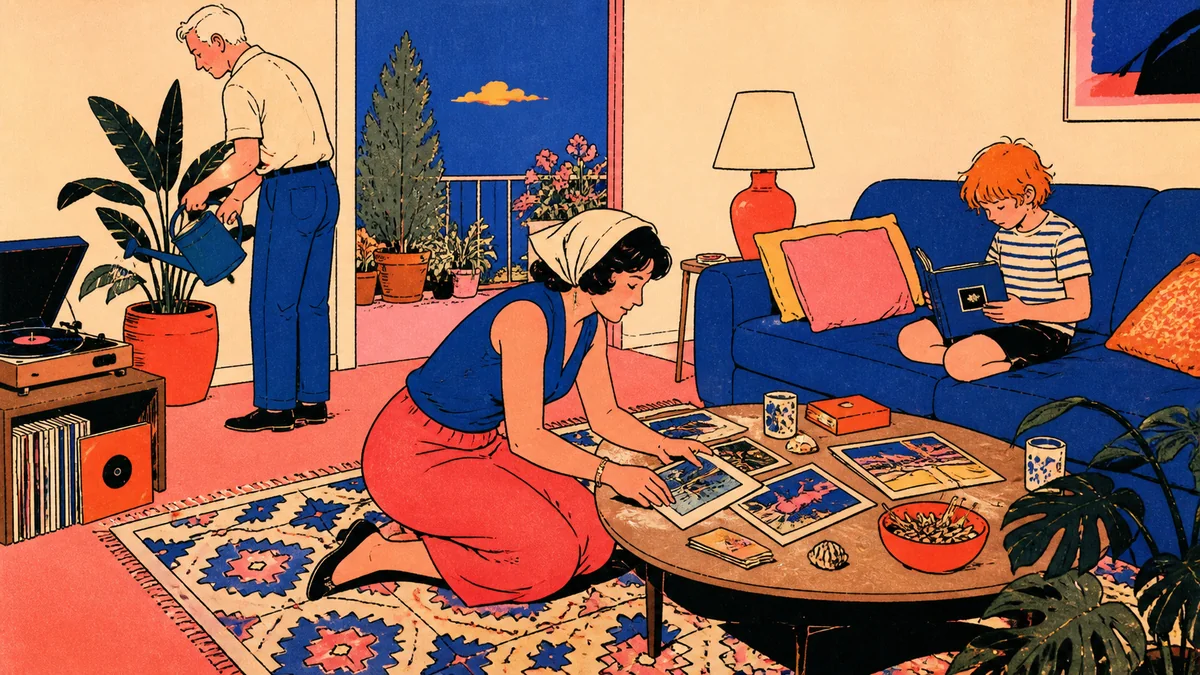
Once you have several scenes, spread them on a floor, table, or digital board. Ignore dates for a moment. Sort by the question they trouble. Which scenes belong to the same tension? Which one changes how an earlier scene reads? Which scene repeats information? Which beautiful memory belongs in another book and is currently eating snacks in this one?
Now you can begin a memoir structure.
Chronological order is one option. It is especially useful when change accumulates and the reader needs to understand what came before what. But chronology does not have to start at birth. Start at the first meaningful disturbance inside this book's territory, then move forward. You can braid two periods, arrange chapters around places or objects, or build linked essays around one concern.
A light outline can follow what the pages discover. Write one line for each possible chapter: the scene or period, what the past self wants, and what the present narrator is trying to understand. If three chapters perform the same work, you have found either a motif or a traffic jam. Read them aloud before deciding.
Then draft the section with energy, even if it belongs in the middle. You are not violating the book. The book does not yet have a constitution.
Starting with the live scene teaches you more than polishing an introduction about the meaning of memory. Open the kitchen door. Put the bowl in somebody's hands. Let the curtains be wrong. You can research them later.
Keep notes beside the manuscript for details to verify, people to contact, gaps in memory, and questions you are not ready to answer. A bracket that says [which hospital?] is more honest than a confident marble lobby assembled from three television shows.
Also keep a private version if you need one. The page where you tell the truth to yourself and the page you publish do not have to be identical. Cutting a detail for another person's privacy does not make the private insight false. Keeping a hard detail does not automatically make the public telling brave. Editing is where intention meets consequence, usually without introducing itself.
If drafting itself has gone cold, returning to the part of a project that still feels alive is more useful than assigning yourself a heroic daily word count and becoming your own least popular supervisor.
Start writing your life story before you know the ending
At some point, the project may reveal its reader. It may be for strangers who recognize the same kind of family silence. It may be for six relatives and one future grandchild who will be delighted to learn that the famous orange bowl was probably red. It may be for you alone.
Fame is not the admission price for writing a life. A public memoir still asks more than “this happened to me,” but that is a craft question, not a celebrity test. The reader needs a line of attention they can enter: a question, desire, place, relationship, or change carried honestly enough that another person can feel its shape.
You will not know all of that on day one. Day one can be smaller.
Useful answers, briefly
Life-writing FAQ
Do I need to be famous to write a book about my life?
No. You can write for family, for a particular community, for a wider public, or for yourself. A book meant for strangers needs a clear subject and a shaped reading experience, but the writer does not need a famous name.
How long should a book about my life be?
There is no useful universal length before you know the form, audience, and publishing path. Write enough scenes to discover the book's boundary, then study current books in the same category rather than padding your life to meet a number.
Does a memoir have to be chronological?
No. A memoir can move chronologically, braid time periods, use linked essays, or organize around places, objects, and themes. The order should help a reader follow the question or change at the center.
What if I cannot remember exact dialogue?
Do not present invented wording as a recording. Paraphrase, signal reconstruction or uncertainty when it matters, and use letters, messages, recordings, journals, or other witnesses when exact words carry weight.
Should I change people's names in a memoir?
Sometimes a changed name is a considerate editorial choice, but it does not guarantee anonymity or solve questions of accuracy, privacy, or harm. For a manuscript with serious publication risk, get advice about the actual pages and people involved.
Do I need an outline before I start writing my life story?
No. Begin with a few live scenes if an outline makes the project go flat. Once those pages start revealing a question, a light outline can help you choose what belongs and what is waiting for another book.
The rule of thumb
Start with the memory that still moves, not the earliest one you can locate.
Take the photograph, receipt, voicemail, room, name, smell, or unfinished question that keeps returning. Set a timer if timers do not make you feel like a microwave meal. Write three hundred words about the moment before you understood what it meant. Do not explain the whole life. Do not introduce every relative. Do not design the cover.
Put one person in one place. Let the present you watch without rushing in to tidy the room.
When the scene is finished, ask what other memory answers it, contradicts it, or makes it stranger. Write that one next.
The book can begin there: not at the beginning of your life, but at the first memory that opens a door and leaves you curious enough to walk through.
Further reading
Sources
- Marion Roach Smith (opens in a new tab) supported the practical distinction between autobiography's broad life account and memoir's focused territory.
- Tanja Pajevic via Jane Friedman (opens in a new tab) supported using scope and a central question to select material and shape a memoir arc.
- Sarah Chauncey via Jane Friedman (opens in a new tab) supported distinguishing the present author's perspective from what the past self knew inside a scene.
- Amye Archer at Brevity (opens in a new tab) supported revision that widens a one-sided portrayal without erasing harm.
- Lisa Romeo via Jane Friedman (opens in a new tab) supported telling the part of another person's story that intersects with the writer's own and treating permission as a separate publication decision.