Story craft · Essay 05
How to Write a Novel Outline That Leaves Room to Write
Plan the choices that move the book. Leave the curtains alone until somebody enters the room.
If you want to know how to write a novel outline, start with three things: the character's problem, the choices that make it worse, and the ending those choices are moving toward. That will carry a book surprisingly far, at least until a minor character demands better pay. The chapter-by-chapter details can wait until the story gives you a reason to decide them.
An outline should make the next stretch of writing easier to see. It does not need every scene or chapter break before you begin.
I like an outline that behaves more like a penciled route than a railway timetable. It shows where the story is headed, where the ground gets dangerous, and which destination would make the trip matter. It also expects the traveler to find a washed-out bridge, a better road, or lunch.
That last part matters. Some writers avoid outlining because they are afraid the plan will spoil the surprise. Others keep polishing the plan because it feels safer than finding out whether the book works. A useful outline settles the question that is stopping today's writing and leaves tomorrow's questions alone.
What should a book outline tell you?
A novel outline is a working plan for the whole story. It shows what disturbs the opening situation, what the main character does about it, how those actions change the problem, and where the story is likely to end. It may be a page of notes, a stack of cards, a scene list, or a document that would alarm a small printer.
The format is not the important part. The important part is whether the outline can answer a few basic story questions.
- Who is living an ordinary life before the book interferes?
- What changes badly enough that they cannot keep living the same way?
- What do they choose to do?
- How does that choice create the next problem?
- What final choice or consequence would make the ending different from the beginning?
You can add acts, beats, subplots, timelines, and chapter notes later. Begin with movement. If the outline only contains events, such as an army arriving, a secret being revealed, or a tower falling, it may be a respectable calendar. It is not yet telling you why this particular person carries the novel.
K. M. Weiland uses more structure than some writers will want, but I like the permission underneath it: a structural model is one reading of how stories tend to move. It can help you notice a weak turn. It cannot arrest you for putting the midpoint in the wrong chapter.
Use the model to ask sharper questions. If you find yourself bending the book so every box stays tidy, the model has stopped helping.
Start with the person who can make the trouble worse
Let us give the outline somewhere to happen.
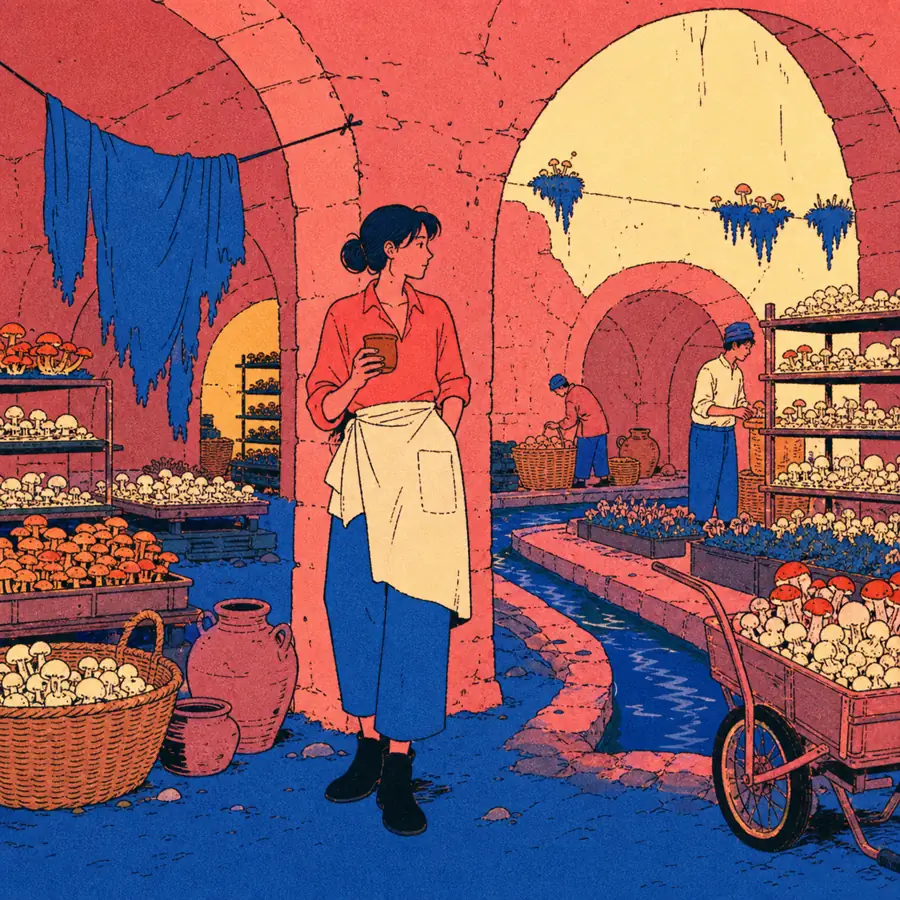
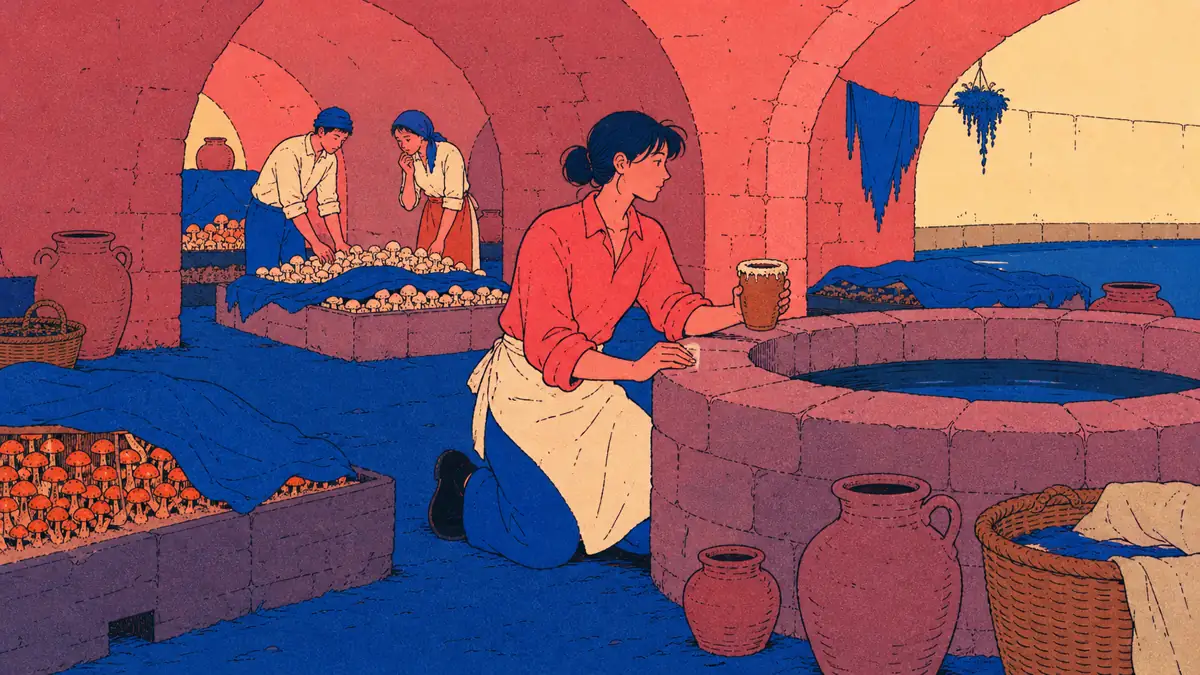
Sori grows medicinal mushrooms in the cool agricultural tunnels beneath a desert city. Sunlight is expensive aboveground, water is guarded, and most of the city's food begins in caves like hers. On an ordinary morning, Sori checks the damp cloth over each growing bed, argues with a blue mold that has never respected authority, and carries a clay cup to the communal well.
The water leaves a white crust on the rim.
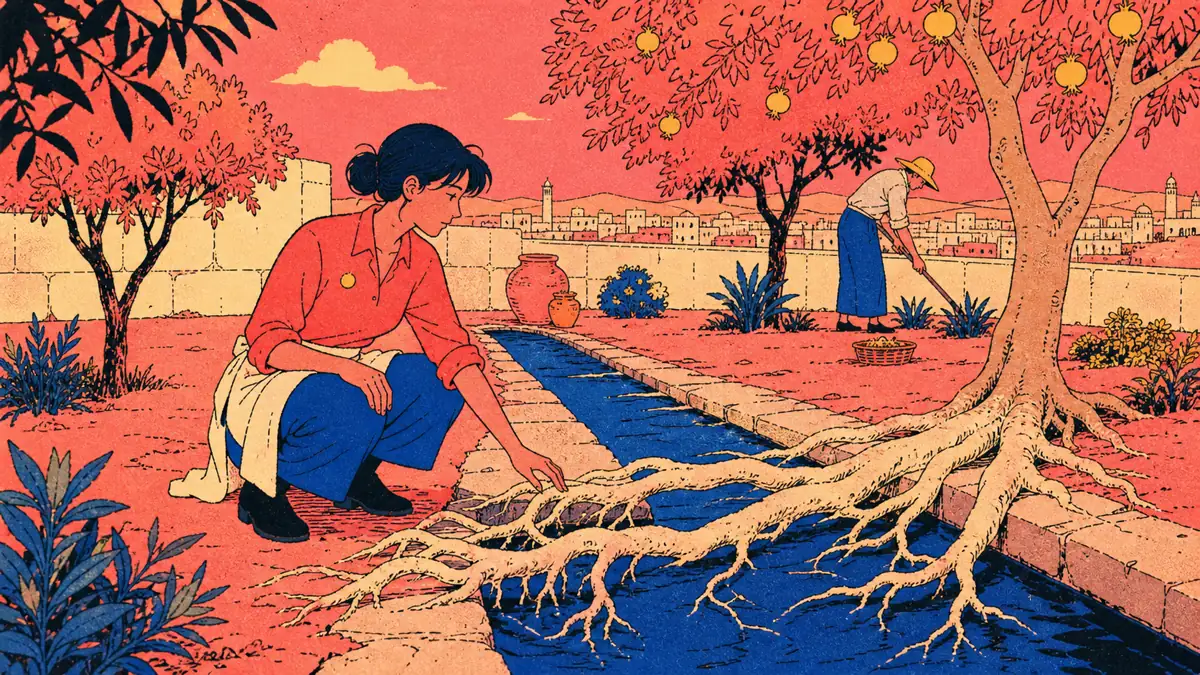
Within a week, three cave gardens fail. The city inspectors blame careless growers and order the tunnels sealed. Sori's family will lose the cave they have worked for two generations. She suspects the private orchard above the palace has pushed its roots into the old water channels, but proving it means entering a district where underground growers are not welcome and searching records that may show her family never owned the cave as cleanly as they believe.
Now Sori has somewhere to push. She could obey the closure order, smuggle water, confront an inspector, trespass into the palace orchard, or convince the other growers to act together. Whichever way she moves, she creates a different book.
The salty wells are trouble. Sori stealing an inspector's sun badge is the beginning of character. It shows us her nerve, her impatience, her divided loyalties, and several fresh ways to make Tuesday worse.
If your outline feels lifeless, look at the verbs. Are the important moments things the protagonist does, or things the author drops on them from a tasteful height?
The better the characters, the less politely they will carry out a plan written before you knew them. That is not always a problem. As I argued in the essay on writing better characters, choices reveal more than a dossier does. The outline should make room for those choices to alter the route.
How does a story outline keep the middle moving?
Beginnings often arrive with a face. Endings sometimes arrive with weather, music, or one excellent final image. The middle arrives wearing work boots and asking where you keep the structural supports.
The middle of a book is not simply the distance between the inciting incident and the climax. It is where early choices acquire consequences, easy plans stop working, alliances change, and the character begins to understand what kind of problem they are actually in.
For Sori, the first version of the book outline might say:
Opening: The wells turn salty. Inspectors close the cave gardens. Sori believes one piece of proof will force the city to reopen them.
First turn: She steals a sun badge and enters the palace orchard. She discovers the roots are drawing from an illegal channel, but the channel is much older than the current palace.
Middle shift:Sori learns the underground growers' own founders diverted that channel generations ago. Exposing the palace alone will not save her community. The clean version of the truth has become inconvenient, which is usually how you can tell it has finally arrived.
Crisis: The growers want Sori to hide the old diversion and release only the evidence against the palace. Her family asks her to protect the cave claim. The inspectors prepare to flood the tunnels.
Ending direction:Sori releases the complete channel record, including her guild's theft. When growers and upper-city laborers see how both sides have hoarded the water, they tear open the private gates and restore the old channel. The gardens survive, but Sori's family can no longer claim their cave as theirs alone.
That is enough to see a route through the novel. It is not enough to know every companion, betrayal, chapter, argument, or mushroom-related casualty. Good. Those are not omissions if they are not currently stopping you.
Notice that the middle does not merely add danger. It changes Sori's understanding. She begins believing the powerful people aboveground stole the water from innocent growers. Then she learns her own community has benefited from the same hidden arrangement. The later choices become harder because Sori can no longer sort the city into thieves aboveground and victims below it.
The exact turn does not have to occur at a sacred percentage. It does need to change what the character knows, wants, risks, or can do. Otherwise the middle can become a long hallway decorated with complications.
Sori's outline needs reversals because the book promises a struggle over water, ownership, and power. A quiet family novel may find its movement elsewhere. Your outline ought to preserve the particular pleasure your story promises. If the book wants to wander through a house room by room, a diagram full of arrows may be the wrong tool.
How detailed should a novel outline be?
How much detail is enough? Enough that you can sit down and write the next part without first inventing the entire universe.
That answer depends annoyingly on the book. Look for the patch of fog that is actually stopping you. What must you decide before you can write another scene?
If you cannot explain why the protagonist acts, outline motivation and the choice. If the middle contains five unrelated adventures, outline cause and consequence. If three subplots disappear for one hundred pages, map when each one changes. If a mystery depends on who knew what on Thursday, make a timeline. If the next scene is alive in your head, stop planning and write the scene.
Chuck Wendig's catalogue of planning methods is useful because it refuses to crown one permanent winner. A writer might use index cards, a synopsis, a character arc, a test scene, a whiteboard, a story bible, or deliberate improvisation. The choice depends on the book and the person trying to write it.
So use the smallest planning tool that gets you writing again.
A whole-book outline maps the major route. A chapter outline makes the next chapter easier to draft. A scene card can tell you who wants what in one room. A timeline protects chronology. A story bible stores facts that should remain consistent. Trouble begins when one document tries to become all five and starts requesting its own parking space.
This is also the point where outlining can turn into avoidance. If you have spent three evenings selecting colors for plot threads but still cannot say what your protagonist chooses after the first disaster, the colors are innocent. The problem is elsewhere.
How do you outline a novel if you write by discovery?
No writer has to outline before drafting. One writer needs an ending and three turns; another finds the honest version only in prose. Plenty outline one plotline and improvise the relationships. Others write half a book, discover the middle has become a damp sock, and reach for index cards.
Writing Excuses describes outlining and discovery writing as a spectrum rather than rival houses. Their useful distinction is that outlining shrinks the gaps left for discovery. It does not remove discovery unless the outline has somehow become the finished book, in which case congratulations on your strangely formatted novel.
For a discovery writer, an outline might be no more than the current situation, the next likely consequence, and one image near the ending. Sketch three chapters, draft them, and let what you learn shape the next three. Test scenes can remain tests. An ending can be worked backward from. Sometimes the most useful outline is made after the first draft, when the story has finally stopped pretending to be the one you planned.
A complete, messy draft can become the evidence for a revision outline. By then the book has revealed what it is trying to be, along with where it has misplaced three weeks of weather and an apparently important aunt.
This matters because “plotter” and “pantser” can become personality tests with stationery. They describe preferences, not borders. You are allowed to borrow the tool that helps with this book and return it when it stops helping.
Use the outline for whatever you need settled before the next stretch of prose. Leave the rest open long enough for the draft to surprise you.
If planning has cooled the book until even opening the file feels dutiful, step away from the diagram for a while. The essay on regaining passion for writing is about finding the live part of the work again.
What if the draft ignores the outline?
First, do not call security.
When the draft changes direction, compare the new material with the promise of the book. Does the deviation make the character more coherent? Does it uncover a better conflict? Does it deepen the central question? Or is it a charming scene that belongs to another story and has wandered in looking for snacks?
Then revise one of three things: the draft, the outline, or both.
Suppose Sori reaches the palace orchard and refuses to steal the water records. While drafting her, you discover that she is reckless with her own safety but will not endanger the elderly grower who helped her steal the sun badge. That refusal may be truer than the planned burglary. It also removes the evidence needed by the next five outline points.
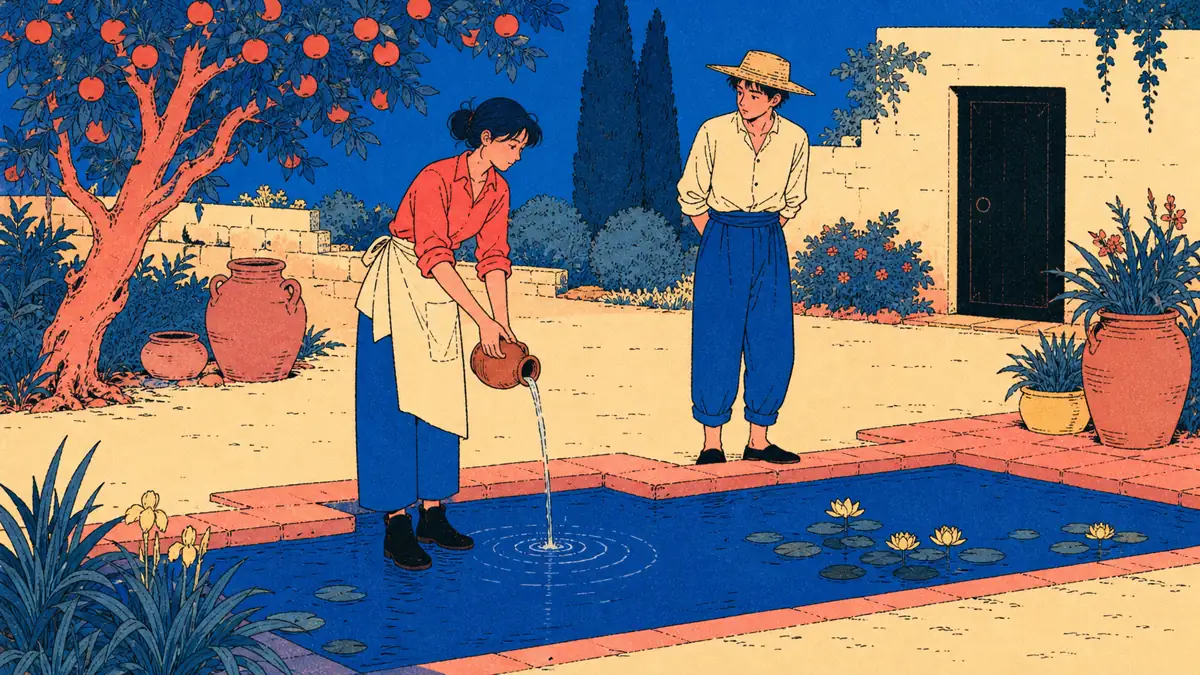
You could force the burglary because the cards say so. You could abandon the entire outline. Or you could ask what Sori would do instead. Perhaps she bargains with a palace gardener. Perhaps she contaminates one ornamental pool to make the salt visible. Perhaps the gardener already knows and demands protection for someone aboveground.
Now revise the later turns. The outline was not betrayed. It received new information.
I prefer to write turns as choices and consequences. They are easier to reconsider than mandatory spectacles, and they feed naturally into scenes: every bargain, refusal, and bad lie can change what happens next. The dialogue essay goes deeper into that smaller scale of attempted change.
Keep the original destination if it still fits. Change it if the new road reveals a more honest ending. A flexible outline is not weak. It is doing the job a pencil promised.
What does a one-page novel outline template look like?
At its leanest, a one-page outline can answer six questions in prose: Who is the protagonist? What breaks their ordinary life? What do they try first? What truth or reversal changes the problem? What final choice must they make? What has that choice cost by the end?
Sori's story outline could fit on one page:
She grows medicine below a city that makes sunlight expensive. Salt poisons the communal wells, and officials blame the growers. To protect her family's cave, she enters the palace orchard looking for proof. She discovers that both the palace and the growers have secretly redirected the same ancient water channel. Each attempt to expose only the other side makes the shortage worse. In the end, she must choose between preserving her family's ownership and making the water records public. She releases them, saves the gardens, and gives up the private claim she began the story trying to protect.
That paragraph gives the novel a beginning, escalating contradiction, character choice, and ending direction. A more detailed story outline could add the major turns, subplot movement, antagonist pressure, and scene groups. A chapter outline could come later, when you are ready to decide exactly where the palace gardener lies and whether the blue mold finally achieves elected office.
The one-page version is not morally superior. It is simply enough for some writers and not enough for others. Add detail when you can name the problem that detail will solve.
Useful answers, briefly
Novel outline FAQ
What should a novel outline include?
A novel outline should include the protagonist's ordinary situation, the disruption, their main goal, the choices and consequences that shape the middle, and an ending direction. Add character arcs, subplots, scene groups, timelines, or world rules only when they help you see the story more clearly.
How detailed should a novel outline be?
Make it detailed enough to answer the uncertainty stopping you from drafting. That may mean five major turns for one book and a scene-by-scene plan for another. If the outline is deciding dialogue, decor, and every minor reaction before you need them, try drafting a scene and see what the story teaches you.
Should a novel outline include every chapter?
No. Begin with the major choices and consequences that move the whole book. Add chapter boundaries when they help you manage viewpoint, pacing, chronology, or the next stretch of drafting. A chapter-by-chapter plan is useful only if the book needs one.
How long should a novel outline be?
There is no required length. A useful outline might be one paragraph, one page, a stack of index cards, or several thousand words. Judge it by whether it makes the story's route and next work visible, not by whether it has achieved the mass of a minor appliance.
Can you outline a novel without knowing the ending?
Yes. Give the story a tentative destination or final choice and mark it as uncertain. An ending direction can keep the middle from wandering without pretending you already know the final scene. Revise it when the draft reveals a more honest consequence.
What is the difference between a novel outline and a chapter outline?
A novel outline shows the whole book's movement: premise, major turns, character change, and ending. A chapter outline focuses on the next smaller unit: its viewpoint, purpose, conflict, revelation, and movement into the following chapter.
The rule of thumb
Write enough outline to see who acts, what their choice changes, and where the consequences may lead.
Then draft until the story gives you a better question. Sori's first outline said she would steal the palace records. The page disagreed. So the next version has a gardener, a poisoned ornamental pool, and one penciled arrow pointing somewhere neither of them entirely trusts yet.
That is not the plan failing. That is the novel finally helping.
Further reading
Sources
- K. M. Weiland (opens in a new tab) supported the treatment of story structure as a pattern writers interpret and adapt.
- Chuck Wendig (opens in a new tab) supported the range of legitimate planning methods and the warning against planning as procrastination.
- Writing Excuses (opens in a new tab) supported the spectrum between outlining and discovery writing.