Story craft · Essay 02
How to Regain Passion for Writing Without Clocking In
Getting back to writing may have less to do with discipline than finding one part of the work you're curious about again.
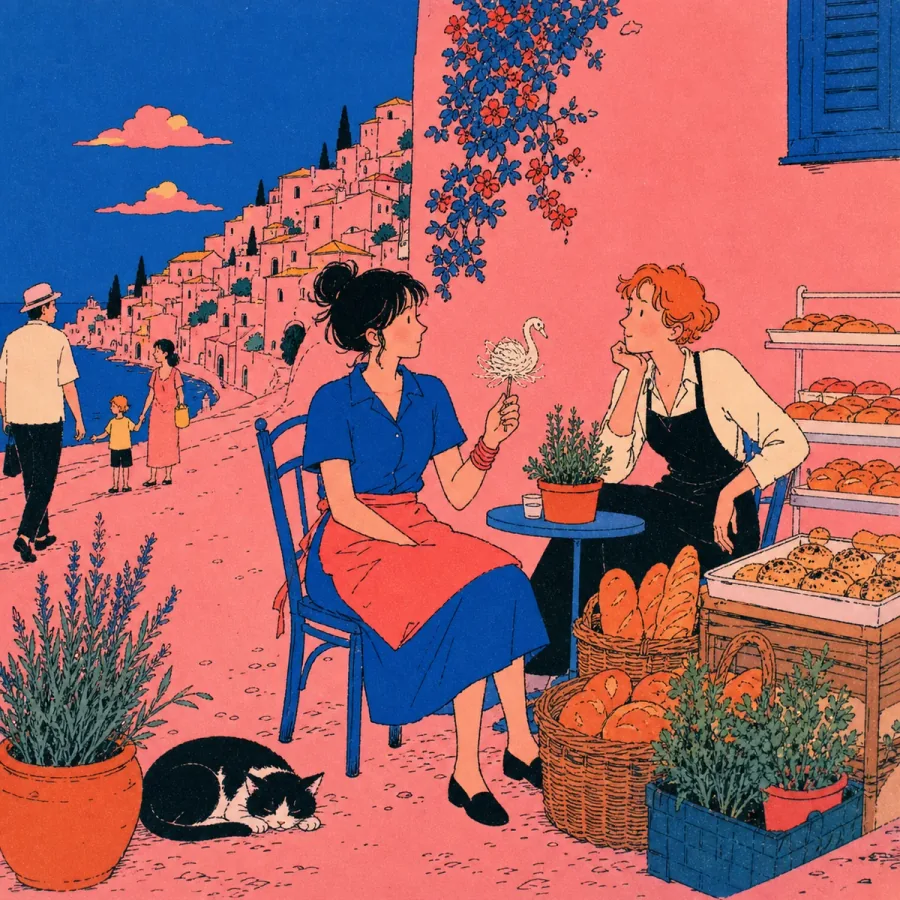
Your novel has a spreadsheet now. The spreadsheet is doing beautifully: color-coded goals, weekly totals, a green cell for every day you behaved. The novel, meanwhile, appears to have slipped out the back sometime in February. If you're wondering how to regain passion for writing, I'd start somewhere less impressive than a new routine. Go back to whatever part of the story you still want to write.
A character will do. So will an image, a troublesome question, or one sentence you want to hear aloud. Follow whichever one gives you the faintest urge to interfere. A quota can keep your hands moving, but it cannot make the book answer back.
That can be hard to trust when writing used to carry you off without being asked. You remember staying up too late because two imaginary people refused to end a conversation. Now you read the same paragraph three times and become fascinated by whether the kitchen has always made that noise.
The usual advice is to become stricter. Wake earlier. Track more. Protect the routine. Buy a notebook with paper so beautiful you become afraid to touch it.
Some of that can help. None of it can order you to care.
Why do I lose motivation to write?
Losing motivation to write can mean several different things, which is inconvenient because the feeling uses one expression for all of them: nope.
You may still love writing and dread this particular chapter. You may love the book but have turned every session into a referendum on whether you are a real writer. You may be tired in a way no scene exercise can repair. Or you may have changed while the manuscript stayed carefully preserved as evidence of who you used to be. I would begin with the manuscript, not with a verdict about yourself.
Suppose you have been writing a fantasy novel about Nessa, an apprentice baker in a hill town where the streets climb faster than the houses. The bakery sits below the eastern gate, where the morning carts come in and every driver claims the wheel broke somewhere that is not his fault. Nessa works before dawn, burns her left wrist on the same oven latch twice a week, and can identify six kinds of flour by touch.
Three chapters ago, Nessa accepted a wedding-cake order worth enough to pay the bakery's flour bill through winter. She did not mention that the bride once promised to marry Nessa's older sister.
Your outline says Nessa must now compare icing costs, test the expensive oven, and decide whether spun-sugar swans are structurally possible. There may be an invoice.
You have not written in six weeks.
Perhaps you did not lose your passion for writing. Perhaps you lost your passion for watching Nessa calculate the price of almonds. The distinction matters. One asks you to repair your entire creative identity. The other asks what happens when her sister sees the bride's name in the order book.
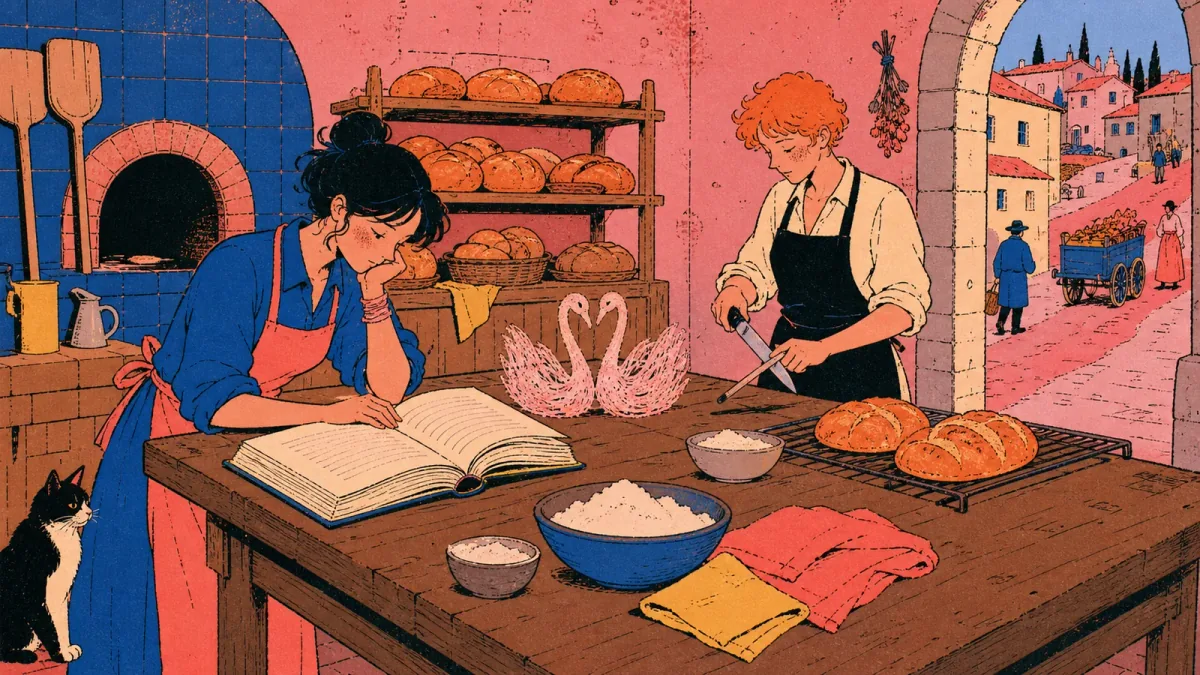
Before you rebuild the habit, locate the exact place where interest left. Read the last few scenes without fixing them. Notice where your attention wanders and where it returns. The warm spot may be tiny: Nessa's sister humming while she sharpens a knife, the bride's name written in Nessa's careful hand, two unfinished sugar swans stuck together at the neck.
One of the swans looks smug. Nessa hates it.
You can enjoy writing again before you become consistent
Consistency helps, but it is much easier to count days than to notice whether any of them contained a spark.
Austin Kleon often comes back to small work, imperfect first drafts, old notebooks, and play. I like the smallness of that advice. You can make one foolish page because you want the page. It does not have to prove that you are back. So make something the project did not request. Write a menu from Nessa's bakery. Let the good bread have ordinary names and the terrible bread be named after military victories. Write the argument she and her sister had years before the wedding order arrived. Describe the alley cat who sleeps near the oven vent and has developed a private, baffling devotion to Nessa's left boot.
This is not wasted work merely because Chapter Twelve cannot use it. You are testing whether the world still answers when you knock somewhere other than the front door.
The privacy matters. A piece written for nobody can be foolish in peace. It does not need to become a sample or evidence that you are back. Nobody needs to know that the alley cat has composed a small religion around a boot.
If a fixed appointment helps you arrive, keep it. If a word count makes you listen for an imaginary foreman, put the count away for a while. When you finish, ask the only question I trust here: did anything become more interesting while I was there?
That may eventually lead back to regular work. It may also lead to three pages about an alley cat who never appears again.
I would keep the pages.
Start writing again where the story is still warm
Writers often try to restart at the point where they stopped, as if the manuscript has been holding their place with one finger and growing increasingly judgmental. You are allowed to enter elsewhere.
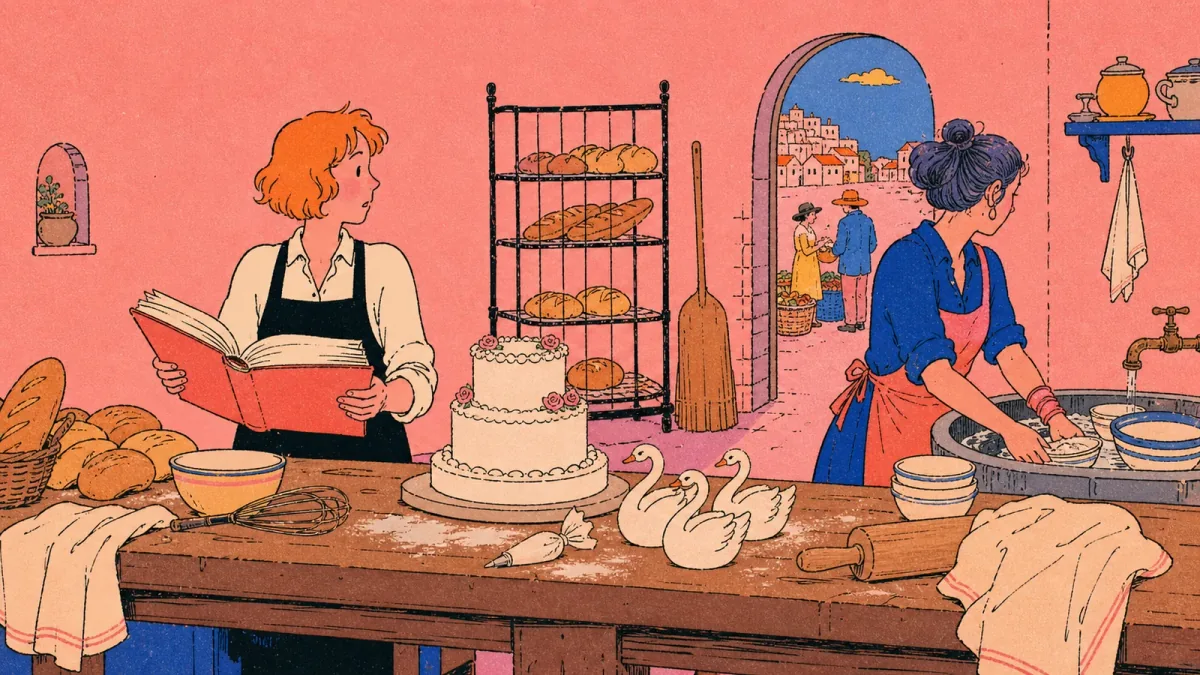
Nessa still has forty-seven lines of cake expenses waiting for her. Leave them there for a morning. Write the scene before them, when her sister reaches for the order book and sees the bride's name.
“Not that page,” Nessa says.
“You took her wedding?”
“I took her cake. The wedding came attached.”
Her sister looks at the price. “How many swans?”
Her sister is holding the order book now. The cake could keep the ovens lit all winter, but the bride is the woman she has spent two years pretending not to miss. Nessa might defend the order, tear out the page, admit she took the order without telling her sister, or become extremely interested in washing bowls. I do not know which one is best. I do know I want to see what she does.
This is where the character-choice work from the first Brett Blogs essay becomes useful again. A choice is not only a plot device. It gives the writer something to wonder about.
Nick Cave has written that creative fear remains real even after a lifetime of making things. I would not give every stubborn paragraph that much grandeur; sometimes Tuesday has simply gone badly. But fear is still not a verdict. You can come back doubtful. If you still want to know what happens, that is enough reason to write the next line.
Stop while something remains. Leave a plain note: The sister knows Nessa took the order before telling her. Or: The bride wants to collect the cake herself. Tomorrow does not need a motivational speech if you have already left it a loose thread.
Is this writer's block, creative burnout, or ordinary exhaustion?
I use writer's blockfor the days when the trouble seems to live inside the work: this scene will not open, this chapter has gone flat, every sentence arrives wearing someone else's coat. Creative burnout feels wider. Writing is not the only thing that has lost its color. Ordinary exhaustion is what happens when life has used the good towels, eaten the leftovers you were saving, and then asked whether you have a minute.
The labels overlap in ordinary conversation. They are not diagnoses, and I would be suspicious of any internet paragraph that identifies your condition before asking how the rest of your life is going.
If the trouble is local, a craft change may help. Skip the dead scene. Change point of view. Write by hand. Read the dialogue aloud until the dog becomes concerned. Let the abandoned sister decorate the wedding cake.
If writing is one of many things that has gone colorless, another clever prompt probably will not fix it. Rest if you can. Read without taking notes. Go for a walk and leave narrative structure at home. If the heaviness has spread well beyond the page, tell someone you trust. A scene exercise does not have to carry all of that.
There is also a quieter kind of recovery in letting other art remain other art. Read a book without studying its midpoint. Watch a movie without asking whether the protagonist's want was established by minute twelve. Listen to music and permit the bridge to cross nothing measurable.
I suspect the writing mind sometimes gathers while you are not looking directly at it. This is mildly annoying because looking directly at things feels more responsible.
What if the old project is the part that is finished?
Returning to writing does not obligate you to return to the same book. When Kathy Stinson returned to dormant work, she did not find everything patiently waiting to be revived. Distance made it easier to remove characters and choices she had once held onto. Sometimes time away returns your enthusiasm. Sometimes it returns your scissors.
Persistence tends to look noble from the outside. Shelving a manuscript sounds like failure. Continuing one for nine resentful years can look like dedication, even when you and the book have not had a civil conversation in months.
Try one honest experiment. Give the old project a scene it did not earn, a new point of view, or a question that threatens its outline. If nothing wakes, notice that without staging a trial.
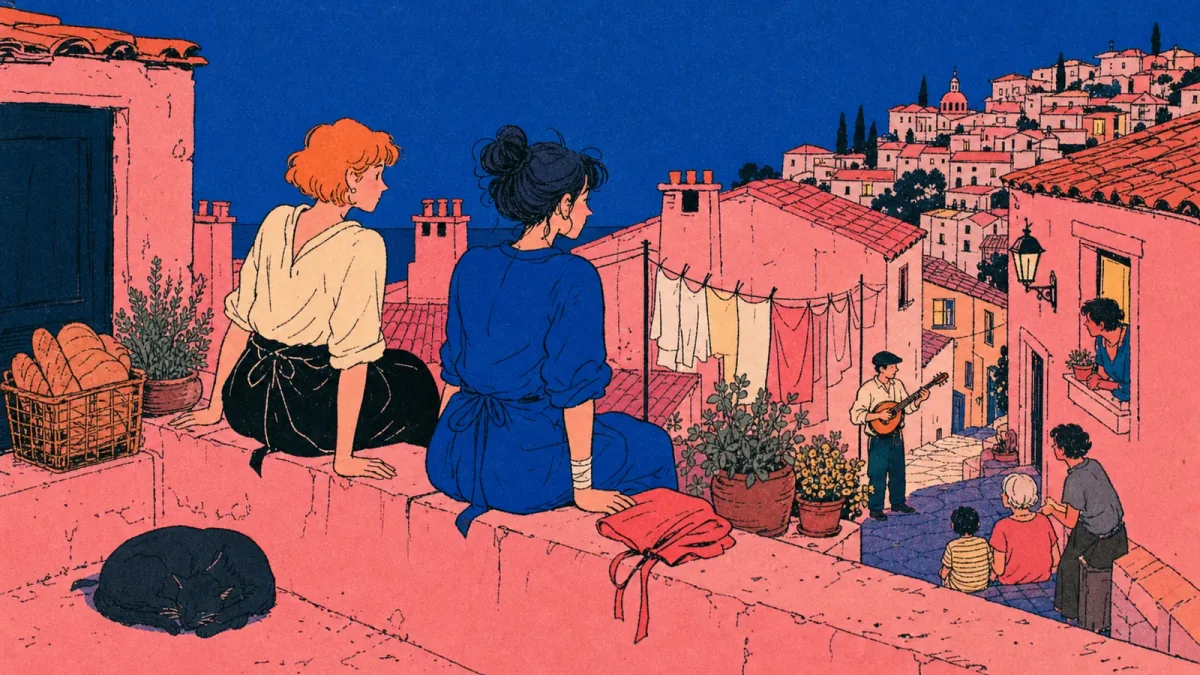
Maybe Nessa's bakery story still has heat but no longer wants to be a novel. It might be a short story about two sisters making a wedding cake for the woman who left one of them. The hill town can survive without eighty thousand words of your assistance.
Maybe Nessa herself remains interesting while the plot around her has become scaffolding after the building left. Take her elsewhere.
Maybe nothing remains.
That hurts, but it does not make the pages useless. They still taught you what you notice, what you avoid, and which promises you can keep for a whole draft.
Perhaps you will return to Nessa in six months. Perhaps you will write somebody else entirely. You do not have to insult the old book before beginning a new one, and you do not have to make the pause look inspiring. Leave the question open for now.
Useful answers, briefly
Writing passion FAQ
How do I get my passion for writing back?
Begin with one part of writing that still creates curiosity and give it a small, private session. Do not require that session to restart a streak or rescue the whole project. If nothing feels alive, rest or try a different project before deciding that writing itself is gone.
Should I force myself to write when I am unmotivated?
A brief, low-stakes start can reveal whether motivation was waiting behind the first few minutes. Forcing a large quota through deep exhaustion or resentment may only teach you to dread the page. Make the first test small enough that you can hear the difference.
How do I know whether this is writer's block or creative burnout?
I am using writer's block for trouble producing or continuing particular work, and creative burnout for broader depletion associated with sustained creative demand. People use both terms loosely. Look beyond the manuscript: if the flatness reaches much of your life or ordinary functioning, treat it as more than a craft puzzle and consider appropriate rest or support.
Is it okay to abandon a writing project?
Yes. Shelving one manuscript does not cancel the writing you did or prevent you from returning later. Before leaving, you may want to test a different scene, form, or point of view—but the test is information, not a sentence handed down by a tiny literary court.
What should I write first after a long break?
Write the scene, image, exchange, or question you are most curious about, even if it belongs later in the story or nowhere in the final draft. Keep it private and short. The first job is to reestablish contact with your taste, not to compensate for every day you missed.
The rule of thumb
On the first session back, follow the part that makes the sensible version of the story slightly nervous.
Write the bakery argument. Give the knife to the sister who was left. Let the smug sugar swan lose its head.
Then stop before the spreadsheet hears about it.
Further reading
Sources
- Austin Kleon (opens in a new tab) supported the use of small work, imperfect first drafts, rereading, and play. His Keep Going (opens in a new tab) supported a sustainable creative life through changing seasons.
- Nick Cave (opens in a new tab) supported the distinction between real creative fear and a verdict that the work should not begin.
- Kathy Stinson (opens in a new tab) supported the possibility that distance can reveal what a dormant project needs changed, removed, or released.