AI & Writing · Essay 03
Why AI Humanizers Don't Work for Creative Writing
A humanizer can change the words. It cannot put back the choices that gave the writing a reason to exist.
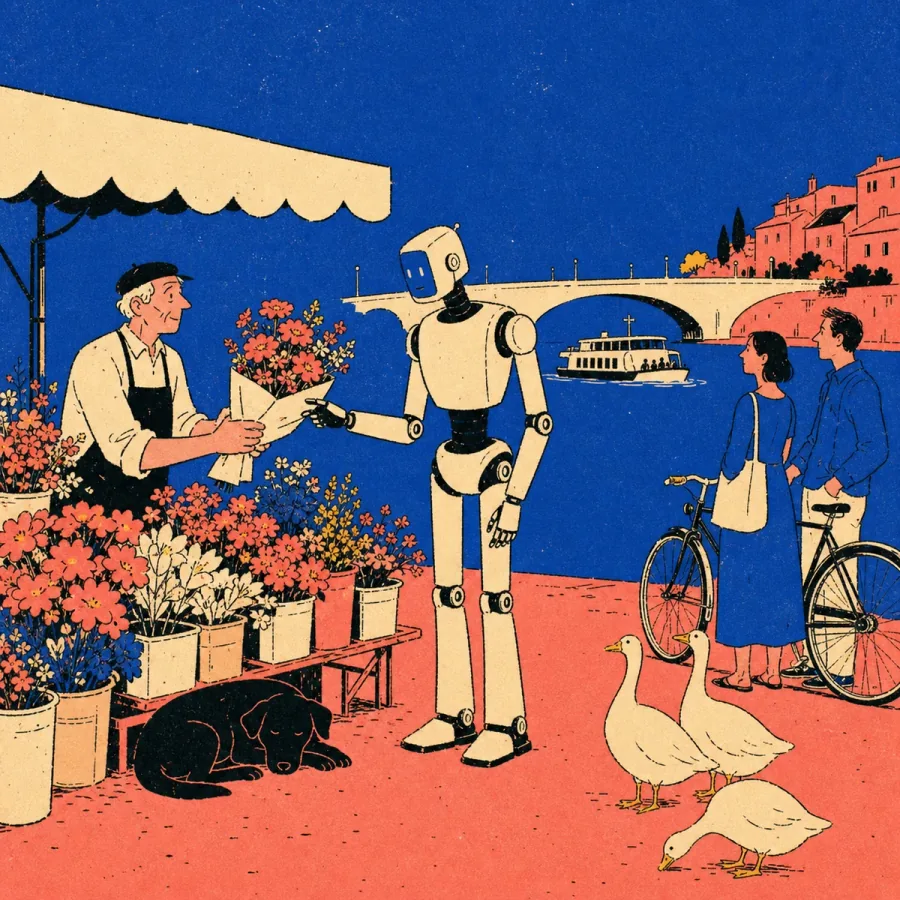
Why AI humanizers don't work for creative writing is simple: they arrive after the choices that create a voice have already been made. The tool can swap verbs, ruffle the sentence lengths, and teach a paragraph to say “honestly.” It is still a thesaurus in a fake mustache.
That does not mean the software changes nothing. A humanizer may make stiff prose looser. It may replace familiar AI phrases or change the result from one detector. But sounding less like a machine is a very small ambition for a story. The better question is whether the passage sounds like you, and whether there is a you left inside it making choices.
I am less interested in whether a sentence can sneak past a classifier than whether it knows why it entered the room.
What does an AI humanizer actually change?
An AI humanizer takes existing text and rewrites it to appear more human. Depending on the tool, that may mean changing vocabulary, breaking up repeated sentence patterns, adding contractions, rearranging clauses, or asking another language model to regenerate the passage with less predictable phrasing.
Those are surface changes. Sometimes the surface needs help. A sentence can be perfectly accurate and still enter the page carrying a clipboard.
But voice is not a finish applied after the words dry. It begins earlier, when the writer decides what deserves attention. One person notices the cracked saucer. Another notices that nobody has touched it since the funeral. A third is wondering whether the saucer could be used as a tiny shield. All three can write clean sentences. They are not writing the same world.
A humanizer can revise the wording it receives. It cannot recover the attention that never made it into the draft.
This is why a humanized paragraph may look busier without becoming more alive. The sentences vary. The transitions stop marching in formation. One adjective has been replaced by a larger adjective that arrived in a rental car. Still, the paragraph has no preference. It does not linger anywhere because nothing matters more than anything else.
No amount of grammar polish can choose a point of view.
Why does humanized AI writing still sound wrong?
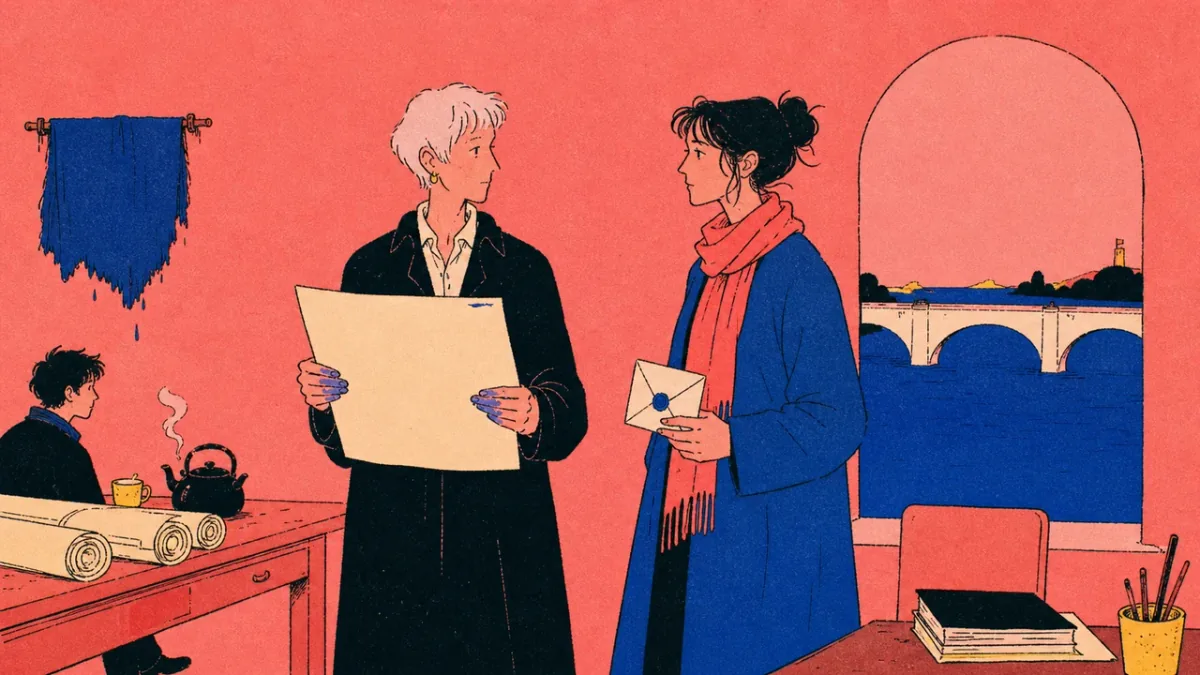
Consider Orra, the senior mapmaker in a river city where official maps decide which neighborhoods receive floodgates before the spring thaw.
The maps are drawn on linen because paper goes soft in the damp. Orra works above the east gate in a room that smells of blue wax, wet wool, and the cloves she puts in the kettle to hide what the water tastes like. Every winter, the council sends her a list of roads, stairs, wells, and bridges that still count as part of the city.
This year, one bridge has been removed from the list.
Orra's daughter lives across it.
A generated draft can state the dilemma easily. Orra must choose between duty and family. The council is cold. The river is dangerous. Her heart pounds as she considers the consequences. Everything has reported for work.
Run that through a humanizer and the council may become callous. The river turns treacherous. Orra's heart hammers now, which at least gives it a hobby. The sentences sound different, but the scene has not decided what it cares about.
The writer still has to choose.
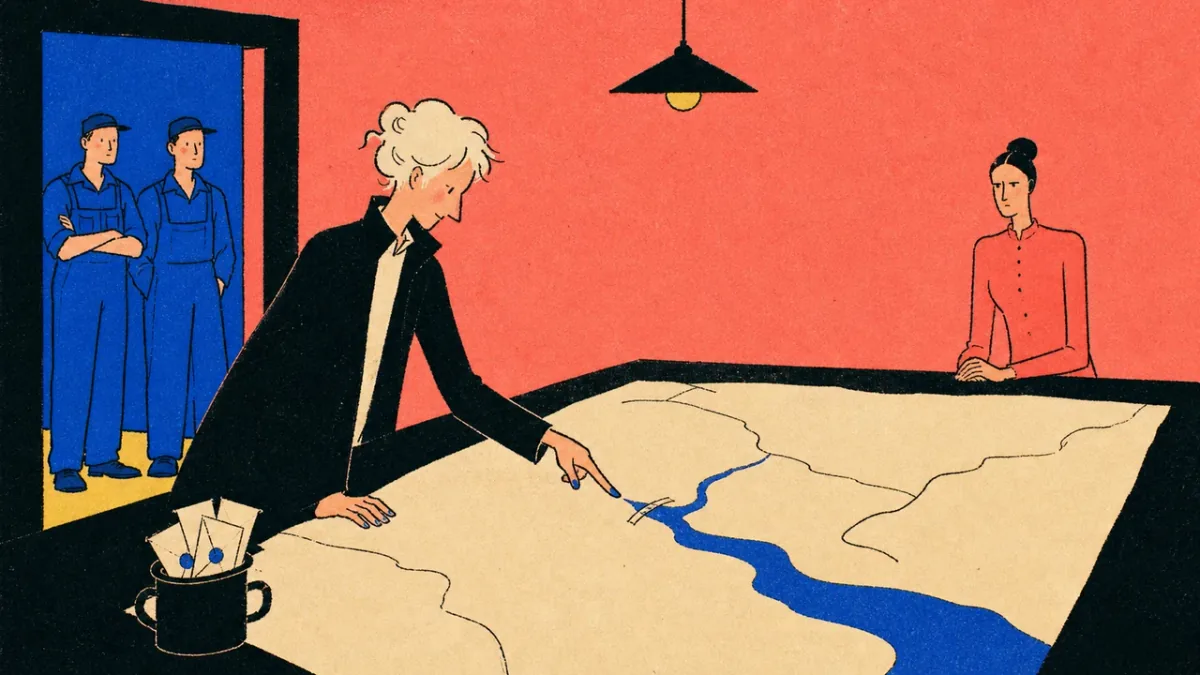
Does Orra erase the bridge with a warm thumb? Does she leave the blue mark and sign the map so nobody can mistake the refusal for an oversight? Does she make the bridge a fraction too narrow, hoping a future clerk will call it an ink error while the floodgate builders understand?
Each choice creates a different Orra. It also creates a different story about obedience, cowardice, love, and what a public record is for. No synonym can select among them because the difference is not hiding in the synonym.
Tawny Lara, writing about voice in the age of AI, argues that writers develop a voice through experience, failed attempts, risk, and the odd material they cannot stop bringing to the page. I think that is the uncomfortable part. Voice is not merely the successful sentence. It also contains all the sentences you rejected and your reasons for rejecting them.
The humanizer sees the winner after the race. It has no idea why the other horses were scratched.
Do AI humanizers work against detectors?
Sometimes, against some detectors, on some passages. That is the honest answer. It is also a poor foundation for a writing life.
Detector results can change with the tool, the model version, the kind of prose, and the length of the sample. Turnitin's current guidance says its report may identify likely AI-generated text that was later modified by a paraphraser or bypasser. The same guidance warns that the system can misidentify both human and AI writing and should not be the sole basis for action against a student.
OpenAI's current educator guidance is blunter: its own research did not produce detectors reliable enough for consequential judgments. It also notes that small edits can evade detection and that human writing can be falsely flagged.
So yes, a humanizer may move a score. Another detector may disagree. The first detector may change next month. You now have a generator, a disguiser, and a detector arguing over whether the mustache is convincing. Meanwhile, nobody has asked whether the paragraph is worth reading.
A lower detector score is not evidence of authorship. It says nothing about who chose the image, checked the fact, felt the doubt, or decided that Orra would rather forge a map than give a brave speech.
There is a fair exception here. A person who wrote the work may be falsely accused of using AI and feel pressure to change the prose until a detector stops complaining. I understand the impulse. I would still avoid feeding original work into a humanizer. The tool can damage the very evidence you need: a consistent voice, a trail of drafts, and decisions you can explain.
What gets lost when a tool rewrites for unpredictability?
Meaning does not live only in definitions. It lives in degree, rhythm, implication, and what a sentence refuses to say directly.
Suppose Orra looks at the council order and says, “They have made the bridge absent.”
That wording is strange. Good. She does not say the bridge is closed or condemned. The bridge still stands. People still cross it. The council has removed it from the official idea of the city, which is a quieter and more frightening action.
A rewrite that changes the line to “They forgot to include the bridge” has made it smoother and false. “They eliminated the bridge” is louder than what happened. “The bridge was no longer present on the map” is accurate, bloodless, and already looking for a chair in a committee room.
The original line may need revision. Perhaps it is too formal for Orra. Perhaps “They've made us an island” belongs to her daughter instead. That is the writer's work: deciding which shade of meaning fits the person, the moment, and the rest of the book.
A humanizer is rewarded for producing change. It may not know which parts must remain stubbornly unchanged. Names drift. Jokes lose their setup. A deliberate repetition is removed because repetition looks suspicious. An uncertain sentence becomes confident. A character who speaks carefully develops a sudden appetite for “moreover.”
Atmospheric moisture may appear.
At that point, the fake mustache needs to be escorted from the map room.
How to make AI writing sound human again
If you already have an AI-assisted draft that feels borrowed, I would not ask another tool to impersonate you more aggressively. Put the draft aside for a moment.
On a clean page, write one ugly sentence about why the scene exists. Not what happens. Why you care.
Maybe the scene exists because Orra is proud of being an honest public servant, and the city has arranged honesty so that it now requires abandoning her daughter. Maybe you care about the way institutions make cruelty look like tidy maintenance. Maybe you simply cannot stop seeing the warm thumb above the blue bridge mark.
Start there.
Write the part of the scene where the choice becomes unavoidable. Let Orra notice what she would notice. If you need the generated draft for facts, continuity, or a useful scrap of structure, bring those pieces back one at a time. Do not preserve a sentence merely because it is competent. Hotel towels are competent. Nobody keeps one in a drawer for twenty years because it smelled like home.
This is also where AI can become useful again. Ask it to find continuity gaps after you write the scene. Let it list consequences you may have missed, challenge whether an official map would plausibly control floodgate work, or collect every description of the east bridge so you can see where they disagree. Those jobs support your decisions instead of replacing them.
If the characters still feel generic, the better-character exercise is to put two things they value into conflict, then watch which one they protect. If the whole project feels cold, the problem may be closer to finding one part of the story you still want to write.
You are trying to resume authorship. Sprinkling humanity over the draft is how we got atmospheric moisture.
That may mean keeping very little. It may mean discovering that the generated outline is useful while every paragraph needs to go. It may mean one line survives because it genuinely surprised you and you can build around it.
Keep only the lines you are willing to revise yourself.

Why does my writing get flagged as AI?
First, do not panic-rewrite the piece for the detector. A false flag is not repaired by making your own prose worse until the software gets bored.
Keep the ordinary evidence of writing: notes, source links, outlines, dated drafts, document history, comments, and earlier versions. If the work is being reviewed by a school, editor, client, or employer, ask what policy applies and request a human review. Explain your process plainly. If you used AI within an allowed boundary, say where and how.
Turnitin itself says its result is an indicator rather than proof and should be considered with human judgment. OpenAI recommends looking at the work process instead of treating detector output as a verdict. Neither point guarantees that a particular reviewer will handle the situation well, but both are better support than a second machine promising to make the first machine less suspicious.
Writers who use concise or formulaic language, including people writing in an additional language, may face particular risk from false flags. That is another reason not to confuse statistical familiarity with dishonesty.
Keep the drafts, and ask a person to consider them alongside the final piece.
And if there was undeclared AI use where the policy forbids it, a humanizer does not solve that problem. It adds another layer of concealment and may produce worse writing for the trouble. The honest repair belongs in the process and the conversation, not in the adjective drawer.
Useful answers, briefly
AI humanizer FAQ
Do AI humanizers actually work?
They can change wording, rhythm, and sometimes a detector result. They cannot guarantee how another detector will classify the text, and they do not automatically restore the writer's voice, intention, or authorship.
Can Turnitin detect humanized AI text?
Turnitin says its current AI Writing Report can identify text that may have been generated by AI and then modified by an AI paraphraser or bypasser. Turnitin also warns that the report may be wrong and should not be used by itself to decide that misconduct occurred.
Why does AI detection flag my original writing?
Detectors infer authorship from patterns rather than observing who wrote the piece. Predictable, concise, formulaic, or short prose can be difficult to classify, and false positives remain possible. Keep drafts and version history instead of rewriting original work to chase a score.
How do I make AI writing sound more human?
Do not begin with surface quirks. Decide what the piece is for, add the details and judgments you actually care about, and rewrite the important passages yourself. A human voice comes from sustained choices, not from adding contractions and swapping common words.
Is it okay to use AI to edit my writing?
That depends on the rules governing the work and on which part of writing you value. AI can help find repetition, continuity problems, or unclear sentences, but the writer should review every change and keep control of meaning. School, employer, client, and publisher policies still apply.
The rule of thumb
If a tool is changing your words mainly to satisfy a detector, go back to the last choice that was unmistakably yours.
Write forward from there. Let Orra leave the bridge crooked. Let the sentence be a little strange because the thought is strange.
At least the map points somewhere you meant to go.
Further reading
Sources
- Turnitin (opens in a new tab) supported the current scope and limitations of its AI Writing Report, including AI-paraphrased text, possible false positives, and the need for human judgment.
- OpenAI (opens in a new tab) supported the limits of AI-writing detectors and the value of process evidence over automatic conclusions.
- Tawny Lara at Jane Friedman (opens in a new tab) supported the argument that writerly voice develops through experience, risk, failed attempts, and specific human interests.