Characters · Essay 16
How to Make a Character's Death Sadder: Make the Absence Cost Something
Two enamel cups, one lying pulley, and a loss that refuses to stay inside the death scene.
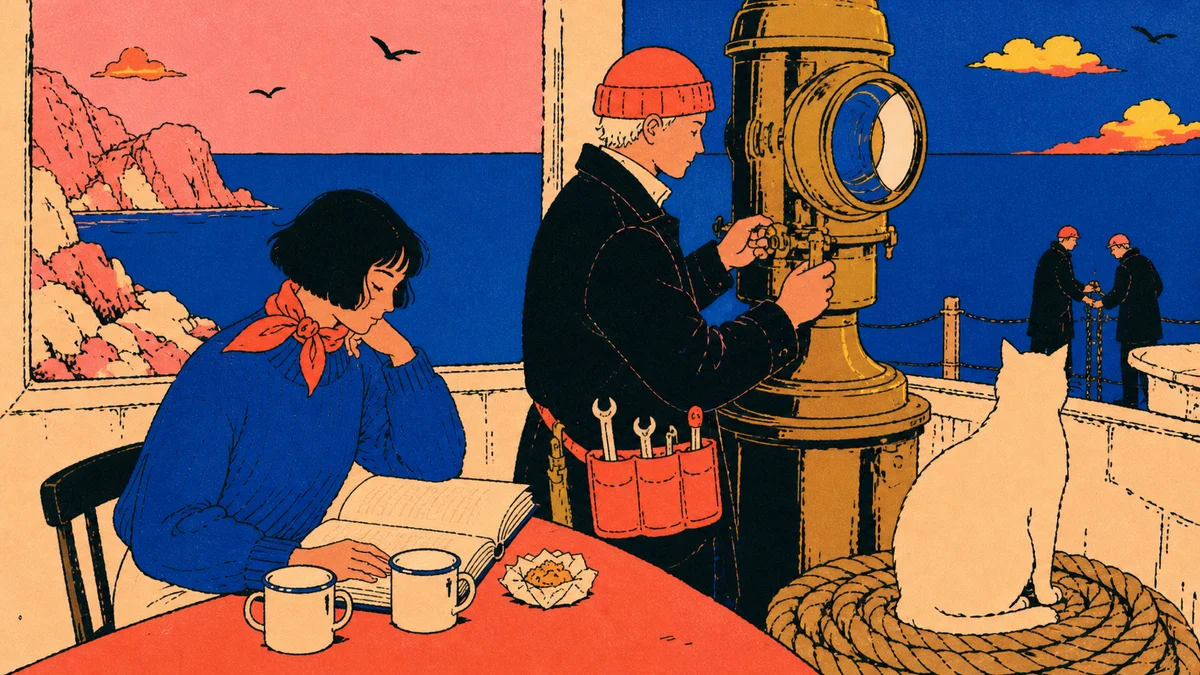
Irena sets two enamel cups beside the signal-room stove and pours tea into both. One goes cold before she notices. Grief has done the washing-up badly. If you want to know how to make a character's death sadder, make the absence interrupt a life the reader has already seen: a shared habit, an unfinished future, a job nobody else performs quite right. The death scene matters, but the empty place afterward proves somebody lived there.
Irena keeps the lamp in a cliffside tower where ships turn east for the harbor. Tomas maintains the gears, shutters, and rescue cradle. Every evening he leaves a twist of sugared fennel beside her logbook because he buys it in quantities normally associated with maritime trade.
He is not charming all day. He sings only the final line of songs. He stores oily tools on clean cloth and clean cups beside oily tools. He has been repairing the lower shutter for three winters and calls this “waiting for the right brass,” although brass has written several times and would like to leave the dispute.
Tonight, a fishing boat strikes the reef. Tomas goes down with the harbor crew to free the jammed rescue cradle. The line parts. The sea takes him. Irena receives no polished final speech—only his red wool cap from a crewman who cannot meet her eyes.
What makes an emotional character death sad?
An emotional character death removes a specific person and the future attached to them. Before the storm, Tomas planned to leave in spring and open a repair shop inland, where the machinery was less damp and the customers less likely to sink. Irena had not answered when he asked whether she would come.
That shop is not a lever labeled MAKE SAD. It gives Tomas direction beyond being selected for death. More important, it gives Irena an answer she can no longer deliver.
Writers often make a flat death louder. They add rain, a childhood promise, a photograph in the pocket, and a second rain in case the first one lacked commitment. Soon the character is dying beneath the emotional inventory of a small department store.
Volume is not attachment. Readers mourn the particular exchange that has ended. Tomas will not sing the wrong end of the song. Irena will never know whether she would have left. The crew must trim the lamp without the man who knew which pulley lied in cold weather.
How to write a sad character death that feels earned
A doomed character should care about something the main plot did not assign them. If everything they love exists to make the funeral efficient, readers can see the author laying kindling around them.
Give the character an ordinary want, an irritating habit, and a relationship with room left in it. Not every detail needs to become a clue. Tomas likes sugared fennel, dislikes gulls, and is wrong about where clean cups belong. Those facts make him present before they make him absent.
This is the same work behind writing better characters through consequential choices. A dossier cannot create attachment by weight. Let the reader watch the person choose, inconvenience somebody, alter a room, and expect a tomorrow.
K. M. Weiland argues that a death should matter to plot, theme, or the surviving characters rather than exist only for shock. I would add one test: the story should lose an option it cannot cheaply replace. The harbor can hire another mechanic. It cannot hire another Tomas. Irreplaceability is personal.
How to write a death scene without melodrama
The scene itself does not need the book's largest language. Donald Maass describes several ways fiction creates emotion: what a character feels, what their actions imply, or what the reader feels that the character does not name. All three permit different distances.
Irena watches rain drip from Tomas's cap and asks whether the rescue cradle was recovered. The question can be grief, command, denial, or all three. A page of sobbing would be no more honest merely because it is wetter.
Another story may need that page. In a recent Writer's Digest essay, Tonja Matney Reynolds gathers useful disagreement: one editor recommends pulling the camera back and underwriting difficult scenes; another writer favors drafting the full action and emotion in one sweep. The useful choice is not quiet versus loud. It is whether the distance belongs to this viewpoint and moment.
Keep the detail the character would notice. Irena reads danger through gauges, wind, and radio static. She may become exact when frightened. Tomas's sister may enter the same room and knock the second cup from the table. Neither response is a universal grief rule.
Let the character death aftermath change the story
A character death aftermath is more than keeping everyone sad for an approved number of chapters. Grief changes choices unevenly. Irena might become reckless on the next rescue because waiting feels like betrayal. She might refuse every risk because the tower has already collected enough. Tomas's sister might close the sweet shop early, then reopen it out of spite because he still owes her for six bags of fennel.
That continuing disturbance is what separates consequence from decoration. If another friendly mechanic arrives, repairs the shutter, brings better sweets, and restores the old arrangement, Tomas has not died. He has been recast.
This does not mean every plot must collapse. The new mechanic may install the long-awaited brass pin. The lower shutter finally works, and Irena hates it for improving without him. Practical change gives grief edges. Somebody must feed the dog, remember the cousin's birthday, finish the roof, or learn the lying pulley.
Conflict matters because it changes the next available choice. Death should do the same. A noble sacrifice can work when it grows from the person already on the page. It becomes machinery when a selfish character turns saintly because the outline wants a clean funeral.
Meaning can stay mixed. What should not stay unchanged is the book.
Should a character have last words?
Only if this character would speak and the scene allows it. Last words can be loving, mistaken, practical, funny, unfinished, or absent. Dying people do not become better dialogue writers on a technicality.
A final speech becomes melodrama when it explains the theme, resolves every relationship, and hands the survivors an engraved set of instructions. If the character has always hidden feeling behind errands, “Turn off the stove” may carry more life than a sudden paragraph about love.
For dialogue that carries competing wants instead of clean information, see how to write dialogue in a story. Silence can also leave room for the reader, especially when earlier scenes have already built the relationship.
Useful answers, briefly
Character death FAQ
How do you write a sad character death?
Build attachment before the death through specific habits, relationships, choices, and future plans. Write the moment at a distance that suits the viewpoint, then let the loss alter later routines and decisions.
How do you make readers care before a character dies?
Let the character want something beyond surviving the plot. Give them useful and inconvenient effects on other people. Readers attach to particular exchanges, not to a biography delivered just before danger arrives.
How do you avoid melodrama in a death scene?
Remove language that tells readers what to feel after the story has already made feeling possible. Keep the physical details and reactions the viewpoint character would honestly notice.
How long should grief affect the story?
There is no required number of scenes. The loss should remain present in changed behavior, practical arrangements, relationships, or choices for as long as that death matters to the book.
The rule of thumb
Revise one scene before the death and one after it.
In the earlier scene, let the doomed character want something, inconvenience somebody, and join a habit another person will miss. In the later scene, show an arrangement that cannot return to its old shape.
At dawn, Irena carries one cup to the gallery. The lamp is still turning. The harbor has sent a young mechanic named Pell, who studies Tomas's notes and says the lower shutter needs a brass pin.
Irena almost laughs.
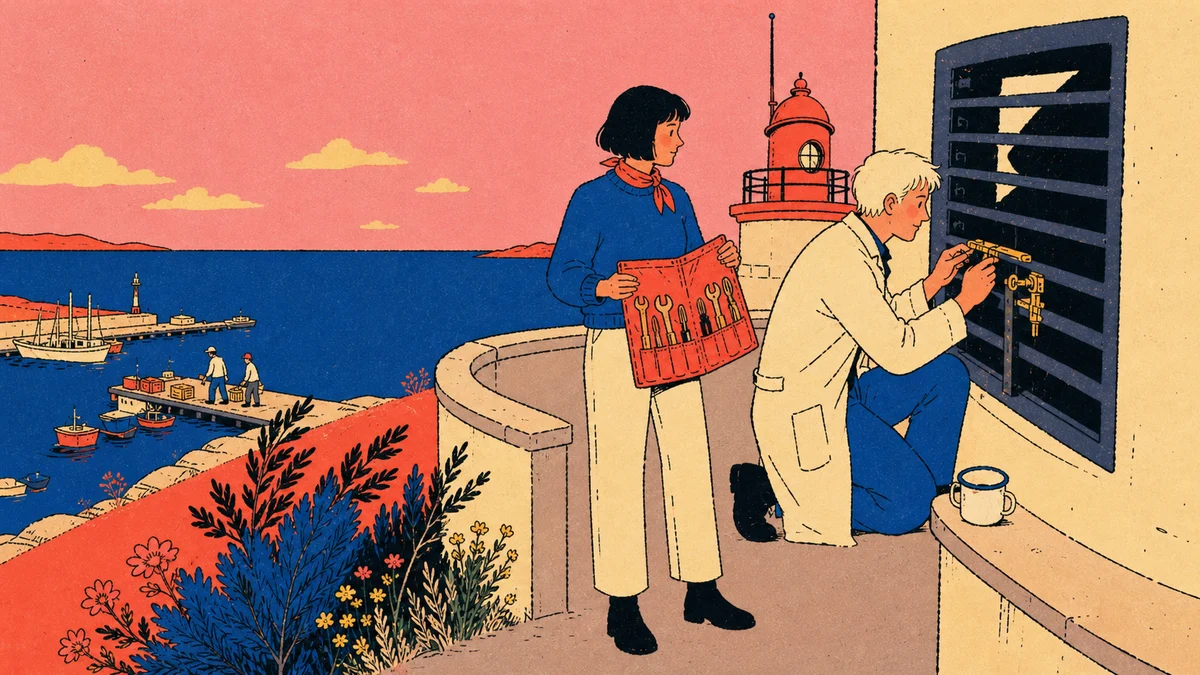
She opens Tomas's tool roll. The fennel twist is folded inside with three pieces left. She gives one to Pell and keeps two.
Then she climbs down to show Pell which pulley lies in cold weather.
Further reading
Sources
- K. M. Weiland (opens in a new tab) supported the distinction between meaningful character death and shock that leaves plot, theme, or surviving arcs untouched.
- Donald Maass via Jane Friedman (opens in a new tab) supported using inner feeling, implied external action, or emotion the reader experiences beyond what the character names.
- Tonja Matney Reynolds in Writer's Digest (opens in a new tab) supplied attributed disagreement about underwriting difficult scenes versus drafting their full action and emotion.