Worldbuilding · Essay 11
How Do I Make a Fantasy Religion Without Being Offensive?
A blue ferry cord, one new temple rule, and a harbor faith that belongs to people who disagree about what it means.
If you’re asking, “How do I make a fantasy religion without being offensive?” start by resisting the oldest worldbuilding shortcut: copy a living faith, rename three nouns, and give the priest antlers. The antlers are innocent. Build instead from what belief means to particular people, research any living traditions you borrow from, preserve disagreement, and let faith shape ordinary life before it supplies villains or magic.
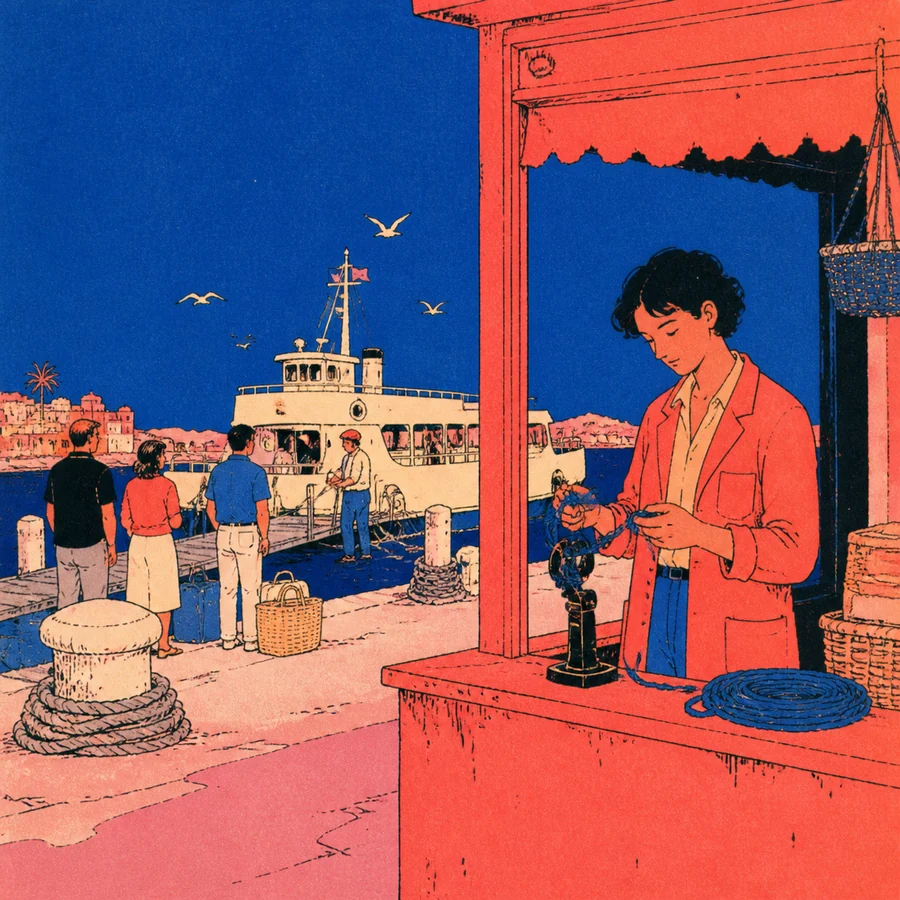
Ressa Venn works the first ferry out of Sennet Harbor. She sells passage tokens through a window filmed with salt and punches each one with iron jaws that leave a crescent in the brass. Before the gate opens, she winds a faded blue cord twice around the punch.
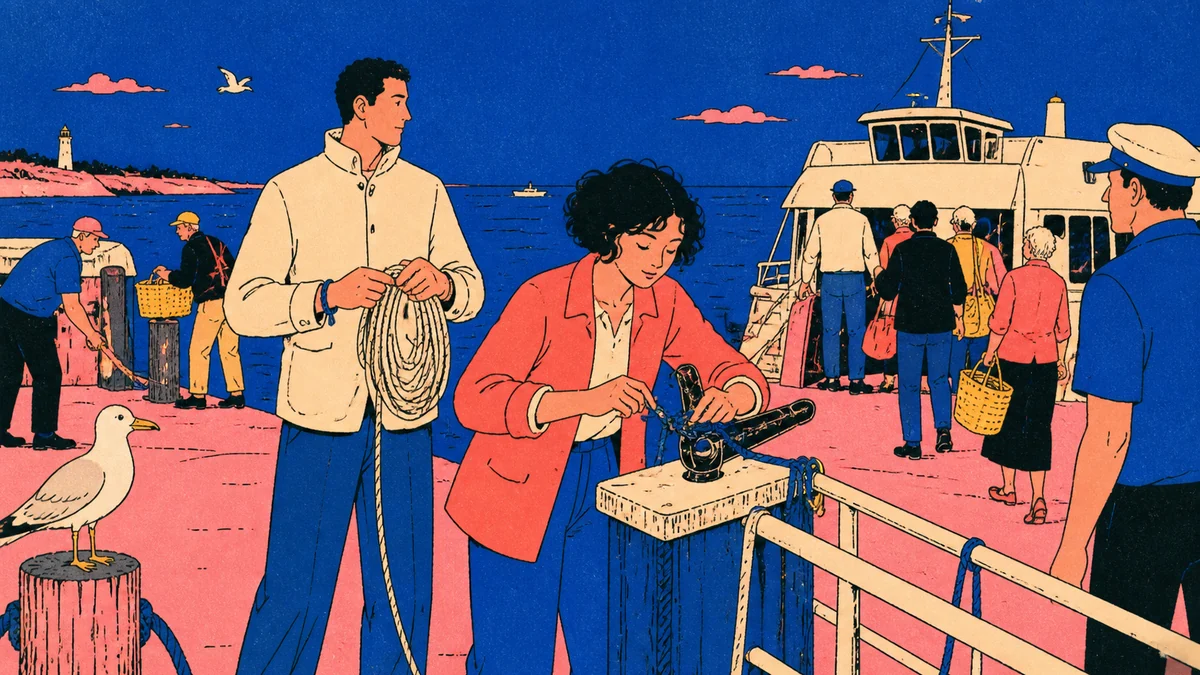
Her mother did it. Most ferry families do. The harbor temple says the two loops honor the god’s two mercies: the boat that returns and the body that is found. Ressa’s brother Davi says the cord began as a way to keep wet tools from slipping out of cold hands. He still ties one around his wrist before every crossing.
Ressa believes the harbor god exists on Tuesdays, during storms, and whenever a priest is being particularly annoying. Davi refuses temple dues but knows all nine verses sung for the drowned. Their aunt sells blue cord beside the ticket booth in approved, blessed, and “blessed enough” grades.
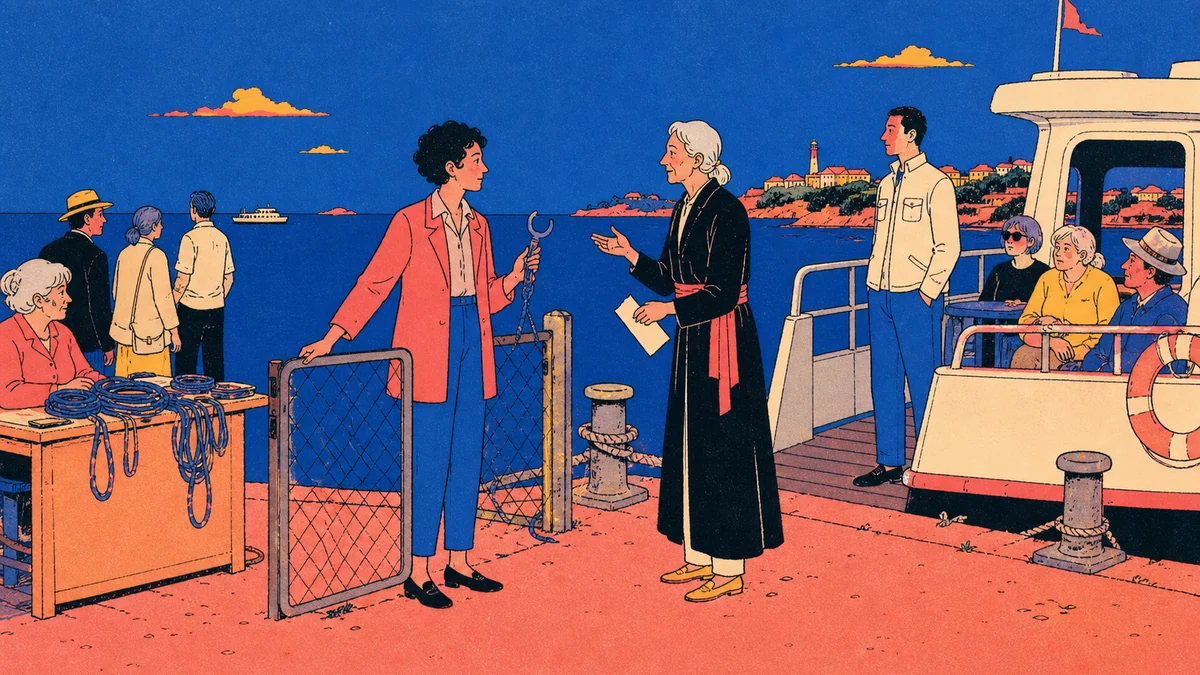
This morning, temple registrar Seli brings a new rule: only temple-approved cord may carry the knot, and work tools may not wear it. She will not certify the first crossing until Ressa cuts the cord from her punch. Passengers are gathering. Obey, and the temple claims her family’s custom. Refuse, and the ferry stays tied up with her license.
None of them represents the faith. Together they begin to make it feel inhabited. Today they also have to decide who gets to name the knot.
How to create a fantasy religion that feels lived in
Fantasy religions often arrive as institutions before they arrive as experiences. We get the temple hierarchy, divine areas of responsibility, forbidden books, ceremonial knives, and one bishop whose face has been privately arranged by a committee of vultures. Then a believer enters the scene and speaks as if Human Resources issued the doctrine that morning.
I would begin smaller. What does a person touch before danger? What do they refuse to eat when somebody dies? Which prayer do they mumble despite claiming not to believe it? Who taught it to them, and what happens when the official version differs from the family version?
Patricia C. Wrede’s worldbuilding questions range through birth, burial, oaths, magic, ethics, government, and ordinary customs. The useful part is not completing the list. It is noticing how belief leaks out of the special building. A religion that matters will be present at the kitchen table, the ferry gate, the argument over a name, and the quiet ten minutes after bad news. It may also be present in the temple. Temples are allowed. Some have excellent roofs.
Start with lived practice. A pantheon chart can wait. The reader will understand more from Ressa retightening her mother’s cord than from twelve paragraphs explaining which god supervises drizzle.
That same story-facing instinct guides the broader essay on building a fantasy world your characters can live in. Follow the details that touch somebody now.
Writing religion respectfully starts with context
“Make it original” can become bad advice. A writer panics about resemblance, mixes pieces from six traditions, and congratulates the result for having no fingerprints. But sacred objects and practices do not become neutral because they have been put in a blender.
If your imagined faith borrows a recognizable garment, prayer posture, holy name, burial custom, or story from a living community, research the context around that element. Learn who practices it, what it means, how people inside the tradition disagree, and what history follows it into the room. Look for writers and community knowledge from within that tradition.
Kemi Cole, writing for SFWA about responsible speculative worldbuilding, recommends moving beyond easy summaries and tourism stories toward local historians, community knowledge, and the values people attach to their own places. Religion deserves at least that much care. That work should improve your understanding, not merely produce a more impressive basket of details.
If the borrowing is central, specific, or close enough that a reader will name it, find an appropriate reader who can notice painful echoes and assumptions you cannot see.
There is a difference between influence and a costume change. “What if this real religion had a dragon?” can be serious when the story knows which religion it is engaging and why. “What if I keep the sacred clothing, erase the people, and make the dragon pope evil?” is usually a clearance sale.
Human communities keep finding some of the same things sacred: birth, death, food, water, fire, names, ancestors, weather, promises, the sky, and whatever is making that noise behind the hill. Total novelty is unlikely. Particularity comes from connection, context, and people.
Why does fantasy religion worldbuilding need disagreement?
Why does Sennet Harbor tie blue cord? Perhaps the first ferry crews used it as Davi says. Perhaps families began leaving cords at the seawall after a wreck. Perhaps the temple later declared the loops an ancient revelation and now charges a half-copper to bless them. Those accounts can all exist at once.
People inside an invented faith should be allowed to argue about what it asks of them. If every priest is cruel, every devout person is gullible, and every doubter owns the author’s best lines, the fictional religion is not being examined. It has been assigned a black hat large enough to shade the nave.
Institutional abuse belongs in fiction. So do hypocrisy and people who use belief to excuse harm. The trouble comes when corruption is the only religious experience the story can imagine.
Let somebody find comfort without becoming foolish. Let another person keep a ritual for family reasons while rejecting its theology. Let a priest be generous about doctrine and impossible about chair storage. Let a reformer cause harm while trying to correct harm. Two sincere believers can read the same story differently because a sacred text is not a vending machine dispensing one approved conclusion after exact change.
Ressa’s temple registrar, Seli, is not secretly stealing the ferry dues. That would be convenient, but convenience has already received enough public funding. Seli believes the standard blessing keeps the custom from being turned into a souvenir. She is partly right: Ressa’s aunt has started selling miniature cords to visitors who have never crossed the water.
Seli is also wrong about ownership. The temple did not invent the knot, and its new rule forbids ferry workers from tying it around tools. It may call that misuse. Davi calls it Tuesday.
Now the disagreement has people inside it. Each has a history with the cord and something to lose if its meaning changes. For more on giving those people actual choices rather than cultural job titles, see how to write better characters.
Does a fantasy religion need gods?
No. A fictional religion can gather around ancestors, places, practices, ethical duties, cosmic forces, or questions nobody expects to settle. If you do include gods, they may be absent, mysterious, disputed, invented, or demonstrably real.
A visible god does not end religion. It changes the questions. If the harbor god lifts boats during storms, people can still argue about what the god wants, why some boats sink, whether priests speak for it, and whether a supernatural being deserves obedience merely because it can rearrange the tide.
Proof of power is not proof of doctrine. A lightning bolt can settle whether somebody throws lightning. It is poor at footnotes.
Decide what belongs to observable fact, what belongs to interpretation, and what remains private faith. Ressa may have watched the tide stop at the temple steps. Davi may agree it happened and reject the temple’s explanation. Seli may hold records of the same event and still misread what it meant.
This leaves room for mystery without making believers irrational. It also keeps the faith distinct from a magic system built only to solve problems. The supernatural can be real while its meaning stays contested.
How do you write a fictional religion without a lore dump?
Put onto the page what changes a character’s action, relationship, expectation, or fear. Ressa’s blue cord matters because she must decide whether to open the ferry under the temple’s new rule. The eleven ranks of tide-saints may wait offshore until one affects the crossing.
The reader can learn belief through friction and care. Ressa reties the cord after Davi mocks it. Seli refuses to confiscate an old woman’s unapproved knot. A child asks whether the drowned can find home if the cord is the wrong blue. Nobody pauses to recite the complete doctrine of nautical return.
Use research beneath the page to check the few details the reader can see. The story should know more than it explains, especially when its invention draws from living traditions.

Useful answers, briefly
Fantasy religion FAQ
Can I base a fantasy religion on a real religion?
Yes, but name the relationship honestly in your own research and learn the living context, not only the symbols that look useful. The closer and more central the borrowing, the stronger the case for community sources and an appropriate outside reader.
How do I avoid making every fantasy priest evil?
Write priests as particular people with duties, loyalties, appetites, blind spots, and competing interpretations. You can portray institutional harm without making sincere belief a shortcut for stupidity.
Does a fantasy religion need a creation myth?
Only if the story touches it. A mourning custom, disputed oath, household blessing, or argument over authority may reveal more than a creation story nobody in the scene currently needs.
Should I hire a sensitivity reader for fictional religion?
Consider one when a living tradition is recognizable, central, or outside your experience. Choose someone suited to the specific culture and material, listen to the limits of their perspective, and remember that one reader does not speak for everyone.
Can I guarantee my fantasy religion will offend nobody?
No. You can research carefully, avoid reducing belief to costume or villainy, invite informed criticism, and repair harm you can see. A guarantee would require the very single-minded audience this article is asking you not to invent.
The rule of thumb
Begin with one believer in one ordinary moment.
Then ask where the practice came from, who interprets it differently, what real traditions your invention touches, and what changes if the character refuses the official meaning.
The first ferry is ready. Ressa has tied the cord twice around the punch, as her mother did. Seli waits at the gate with the temple's new rule folded under one arm. Davi is already aboard, blue thread visible at his wrist, pretending it is only there for grip.
The harbor god, if listening, has not supplied an answer.
Good. Ressa opens the gate.
Further reading
Sources
- Kemi Cole for SFWA (opens in a new tab) supported research beyond surface summaries, transparent engagement, community knowledge, and attention to what source communities value.
- Patricia C. Wrede for SFWA (opens in a new tab) supported optional questions about how religion touches birth, death, oaths, ethics, magic, government, language, and ordinary custom.
- Writing the Other / Nicki Lisa Cole (opens in a new tab) supported the distinction between respectful cultural engagement and taking meaningful elements without context, consent, or attention to unequal power.